Dog Dental Care · 9 min read
Dog Treats for Dental Health: How to Choose Treats That Actually Clean Teeth (2026 Buyer's Guide)
Choose dog treats for dental health that actually work. Learn the VOHC seal, ingredients to avoid, sizing tips, and which dental chews are worth buying in 2026.
Introduction
Finding the right dog treats for dental health feels overwhelming when every package promises cleaner teeth and fresher breath. The truth is, most dental treats on pet store shelves have never been clinically tested for plaque or tartar reduction — they rely on marketing language like "supports oral health" rather than proof. The Veterinary Oral Health Council (VOHC) Seal of Acceptance is the closest thing the pet dental world has to a verified standard, and it's the single most useful filter when you're deciding what to buy. You can learn more about what that seal means in our guide to vet approved dental chews and the VOHC seal.
This guide breaks down what actually makes a dental treat effective, which ingredients to avoid, how to match the right size and texture to your dog, and which specific products are worth your money in 2026. Whether you're starting a daily routine or looking for a better chew than the one your dog currently gets, you'll find actionable recommendations — including how dental treats fit into a complete dog dental care strategy that also includes brushing and professional cleanings.
What Makes a Dental Treat Actually Work
A dental treat only works if your dog chews it thoroughly rather than swallowing it whole. The mechanical action of chewing against a textured surface is what physically scrapes plaque off the tooth surface — no chemical ingredient or breath freshener can substitute for that scrubbing action. The VOHC requires products to demonstrate at least a 20% mean reduction in plaque or tartar across two separate clinical trials before awarding its Seal of Acceptance, and products must meet a minimum 15% reduction in each individual trial. According to veterinary dental experts, VOHC-accepted products typically remove around 40% of existing plaque compared to doing nothing at all, though daily brushing remains approximately three times more effective. This is why dental treats should be treated as a complement to brushing, not a replacement. For a deeper dive into building a routine that combines both, see our guide to daily dog dental hygiene that prevents plaque and gum disease. When shopping, always check the VOHC accepted products list to verify that a product carries the seal — don't rely on packaging language alone.
Ingredients to Avoid in Dental Treats
Some ingredients turn a dental treat from helpful to harmful. Xylitol — sometimes listed as E967 on European products — is extremely toxic to dogs and can cause rapid hypoglycemia, seizures, and potentially fatal liver failure even in small amounts. Fluoride is also toxic to dogs and should never appear in any dental product you give your pet. Beyond those two hard stops, veterinary guidance suggests avoiding synthetic preservatives like BHA, BHT, and ethoxyquin, which have been linked to organ damage in animal studies. Excessive refined sugars and starchy fillers like corn gluten or wheat gluten add calories without nutritional value and can actually feed the oral bacteria you're trying to control. Artificial dyes such as Red 40, Yellow 5, and Blue 1 are best avoided as well, particularly for dogs with sensitivities. If your dog has thyroid issues, check for iodine-rich ingredients like kelp or seaweed, which can interfere with thyroid function. For owners navigating dental disease treatment alongside other health concerns, our resource on dog dental disease treatment stages and home recovery covers what to expect when professional intervention is needed.
How to Choose the Right Size and Texture
Sizing is the single most important safety decision you make with any dental treat. A chew that's too small for your dog can be swallowed whole, creating choking or intestinal blockage risk. A chew that's too large may be difficult for small dogs to manage properly. Always follow the weight ranges printed on the packaging — these are not suggestions but safety guidelines. Greenies, for example, offers five sizes: Teenie for 5–15 lb dogs, Petite for 15–25 lb, Regular for 25–50 lb, Large for 50–100 lb, and Jumbo for dogs over 100 lb. When in doubt between two sizes, veterinary sources generally recommend going larger. Texture matters equally. Veterinary dentists recommend the thumbnail test: if you can indent the chew with your fingernail, it's likely safe. If you cannot, it's too hard and risks fracturing a tooth. Avoid antlers, bones, cow hooves, and hard nylon chews entirely — these are common causes of slab fractures in dogs and offer no proven dental benefit. For more on choosing the right Greenies size, see our complete Greenies buyer's guide covering sizes, flavors, and pricing.
Premium Pick: Greenies Teenie Dental Dog Treats
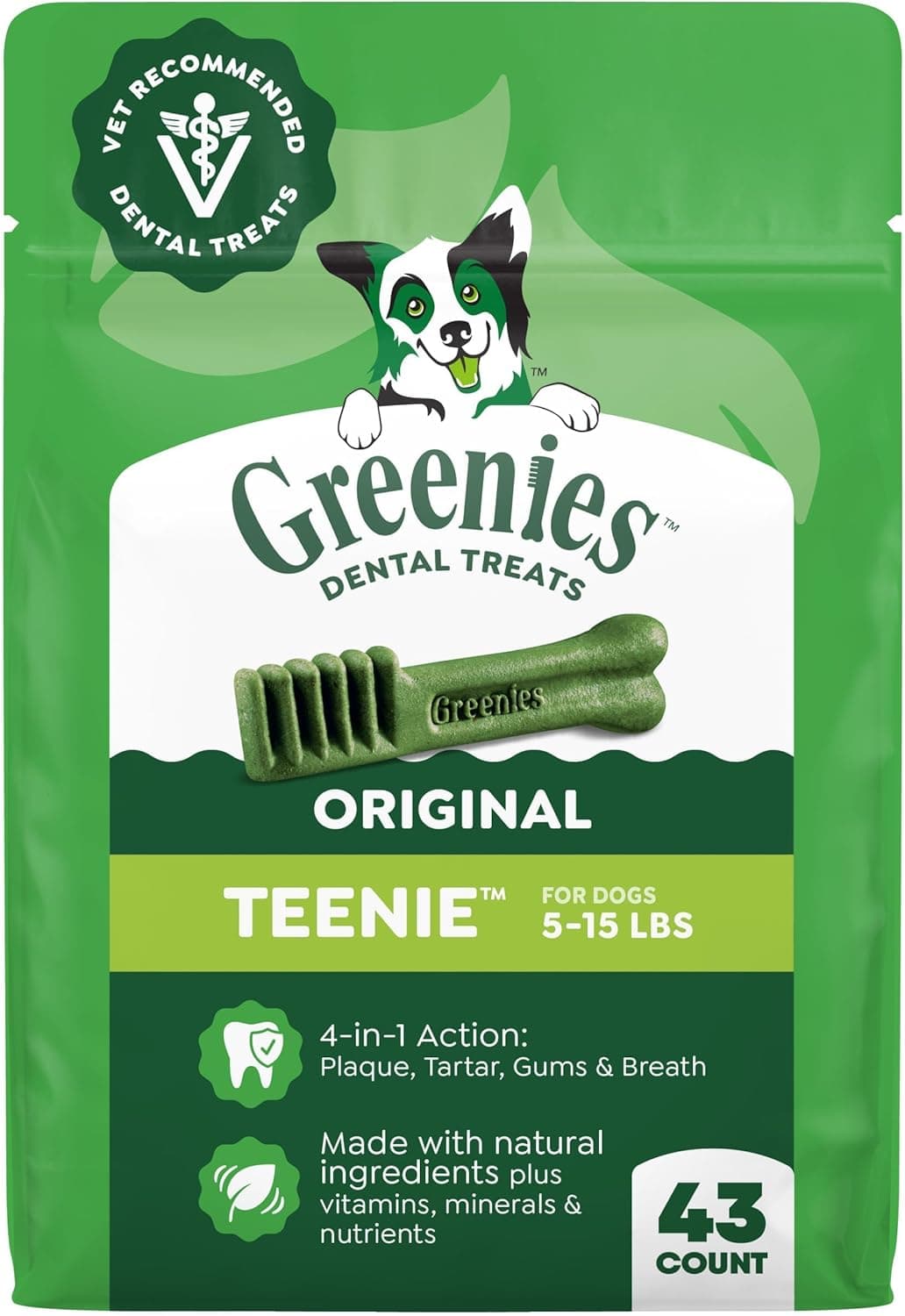
Greenies Original Dental Chews have carried the VOHC Seal of Acceptance for both plaque and tartar control since 2007, making them one of the most clinically validated dental treats available. The Teenie size is designed for dogs between 5 and 15 pounds and contains approximately 26 calories per treat, which fits within the general guideline that treats should make up no more than 10% of a dog's daily caloric intake. The current formula is highly soluble — a significant improvement over the pre-2006 version that was linked to choking and intestinal blockage complaints. After an FDA review, Greenies reformulated to break down much faster in the digestive tract, even if a piece is swallowed without thorough chewing. That said, no chew is completely risk-free. Aggressive gulpers, flat-faced breeds, and dogs with missing teeth or severe periodontal disease need extra supervision or alternative approaches. For small breeds that fit the Teenie weight range, Greenies Teenie Dental Dog Treats (43 count) are a vet-recommended daily option. You can also check current pricing on Amazon. For a broader comparison of whether Greenies are worth it, read our honest review of Greenies safety, sizing, and what vets say.
Value Pick: Minties Dog Dental Bone Treats
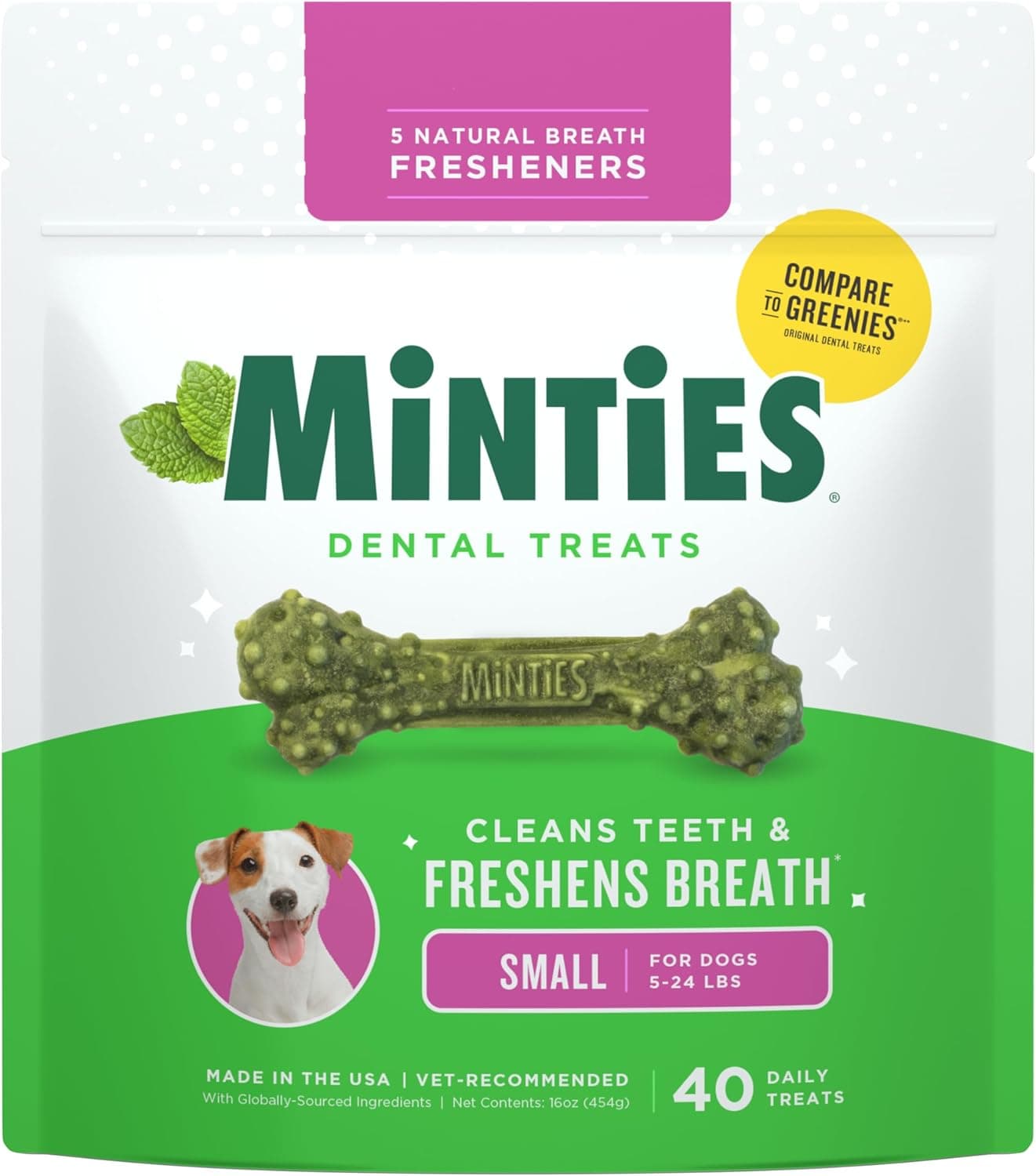
Minties Dental Bone Treats offer a budget-friendly alternative for owners of small and toy breeds who want daily dental support without the Greenies price tag. These treats are grain-free — formulated without wheat, corn, or soy — and use five natural breath fresheners: alfalfa, peppermint, parsley, fennel, and dill. The firm, ridged texture is designed to encourage thorough chewing, which is the mechanical action that removes plaque. However, it's important to note that Minties do not carry the VOHC Seal of Acceptance, meaning their plaque and tartar reduction claims have not been independently verified through the VOHC's clinical trial process. This doesn't mean they're ineffective, but it does mean you're relying on manufacturer claims rather than third-party validation. Minties also contain artificial dyes (Yellow #5 and Blue #1), which some owners prefer to avoid. The Tiny/Small size is appropriate for dogs 5–25 pounds. For owners weighing cost against proven efficacy, Minties Dog Dental Bone Treats in Tiny/Small are a reasonable value pick. You can also compare prices on Amazon.
Complementary Tools: Wipes and Water Additives
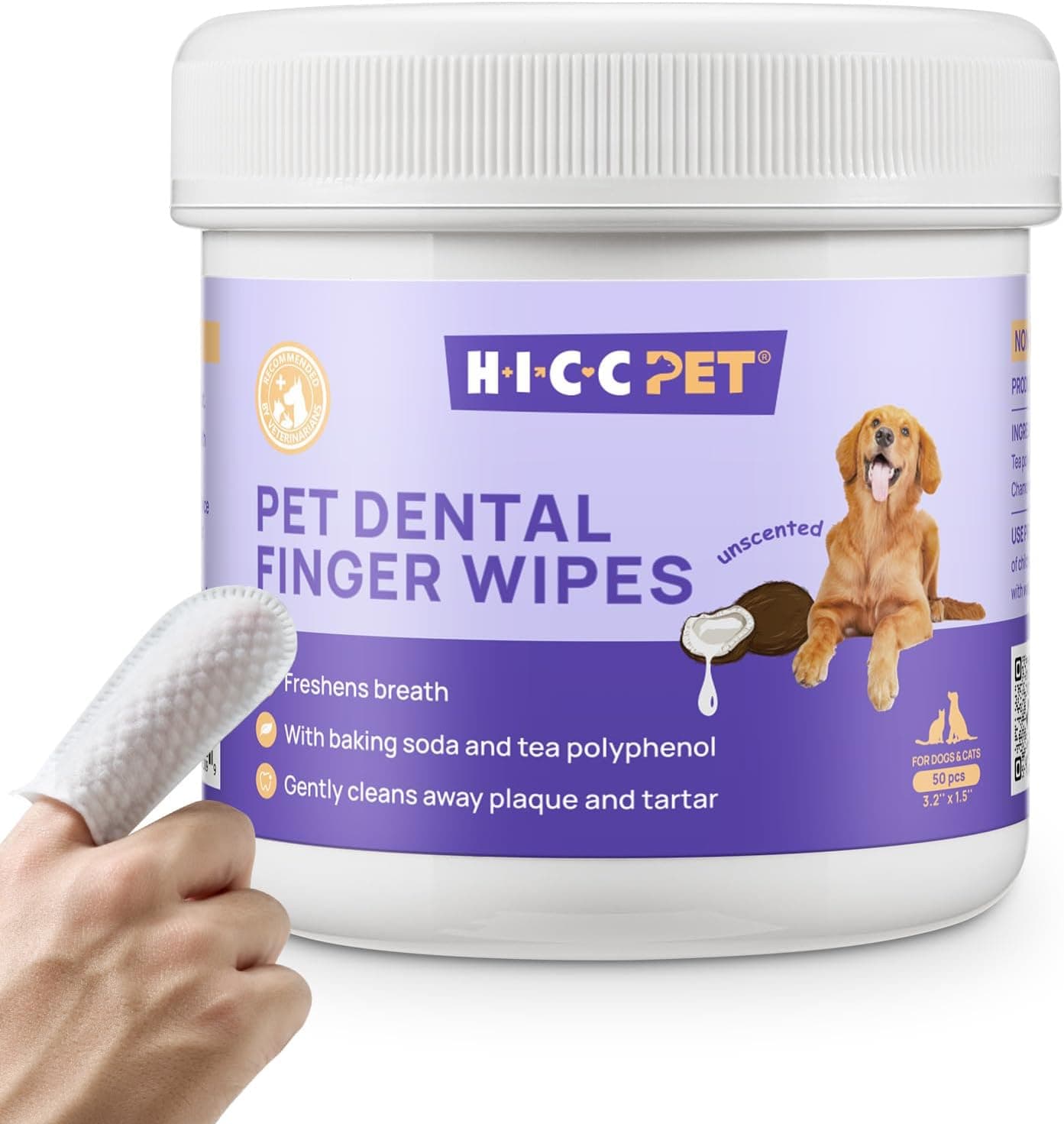
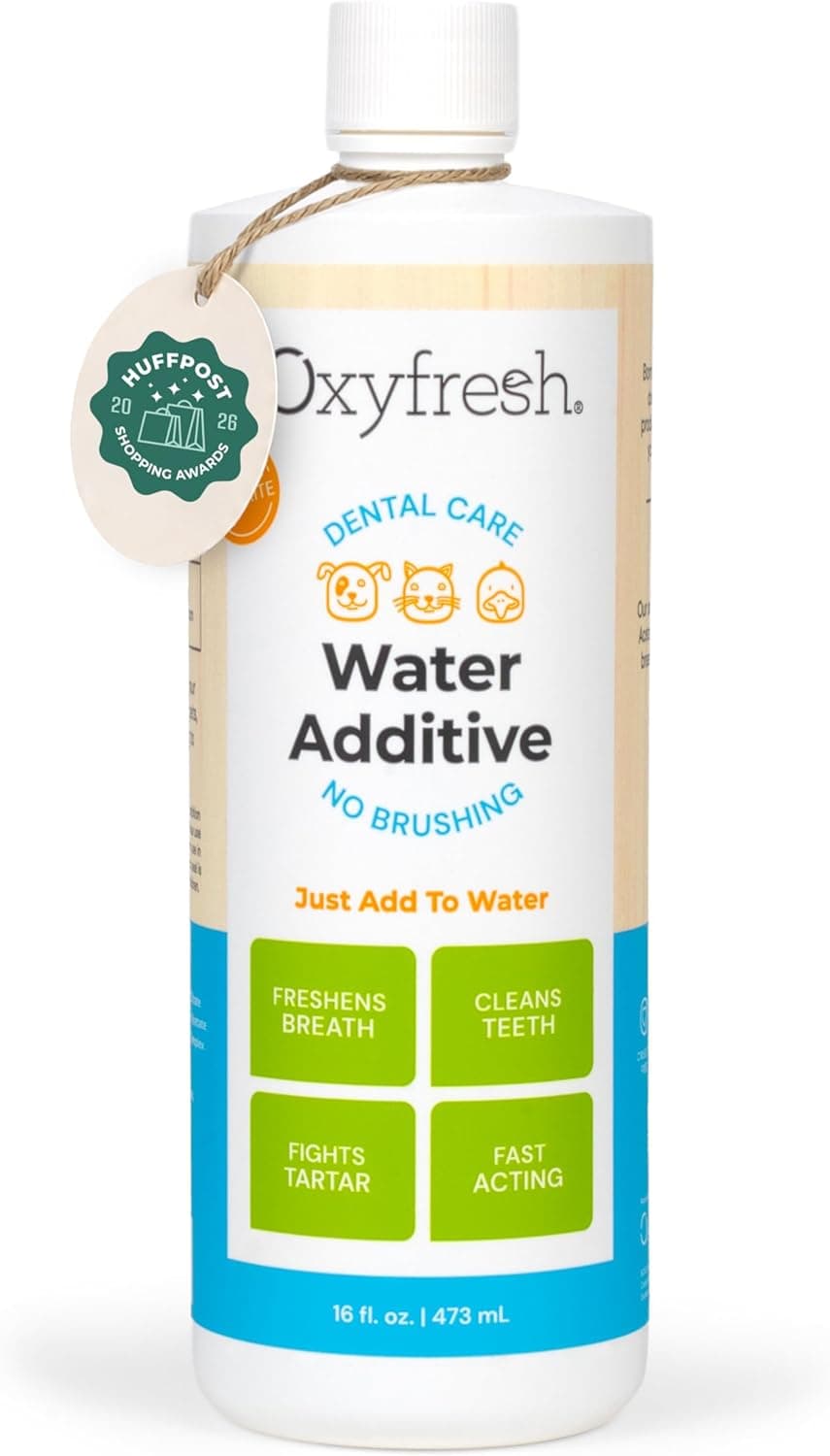
Dental treats work best as part of a layered routine, not as a standalone solution. For dogs who resist brushing or need extra plaque control between chew days, dental wipes offer a gentler alternative. HICC Pet Teeth Cleaning Wipes use a finger-sleeve design with fermented coconut oil and are alcohol-free, making them suitable for sensitive pets. However, they do not carry the VOHC seal, and wipes fundamentally cannot reach subgingival areas where periodontal disease develops — they clean accessible tooth surfaces only. They're best used as a supplementary tool for dogs who won't tolerate a toothbrush. Check current pricing on Amazon. For an even lower-effort option, water additives like Oxyfresh Premium Pet Dental Care Solution use stabilized chlorine dioxide to neutralize bacteria responsible for bad breath. Oxyfresh does not carry the VOHC seal — currently only HealthyMouth has earned that distinction among water additives — and no water additive can remove existing tartar or reach below the gumline. They're best suited for fresh breath maintenance in multi-pet households. Compare Oxyfresh options on Amazon. For more on water additives, read our review of TropiClean Fresh Breath water additive for a comparison point.
Building a Complete Dental Routine
No single product — not even a VOHC-accepted dental chew — can replace the combination of daily brushing and professional veterinary cleanings. The most effective home dental routine layers three elements: mechanical brushing (the gold standard, reaching all tooth surfaces including inner faces a chew never touches), daily dental treats or chews (which supplement brushing by targeting the chewing surfaces), and periodic professional scaling under anesthesia (the only method that removes tartar from above and below the gumline). Once plaque mineralizes into tartar, no chew, wipe, or water additive can remove it. If your dog already has visible yellow-brown buildup on their teeth, schedule a veterinary dental exam before starting any home product — starting wipes or chews on teeth with significant existing disease leads to disappointment. For owners concerned about the cost of professional care, our breakdown of dog teeth cleaning costs in 2026 explains what pet owners actually pay and how to reduce it. And if you're preparing for a professional cleaning, our guide to what happens during professional dental cleaning for dogs walks you through the process and recovery.
Common Buyer Mistakes to Avoid
The most common mistake owners make is treating dental treats as a substitute for brushing. VOHC-accepted chews reduce plaque by roughly 40% compared to doing nothing — but brushing is about three times more effective. Another frequent error is buying the wrong size. A chew that's too small is the leading safety risk because dogs can swallow it whole, creating obstruction or choking hazards. Always match the treat to your dog's current weight, not the weight they'll eventually reach. A third mistake is choosing chews that are too hard. Antlers, bones, hooves, and hard nylon chews are common causes of tooth fractures and carry no proven dental benefit. Use the thumbnail test before buying. Finally, don't fall for packaging that says "supports oral health" or "freshens breath" without the VOHC seal — these are marketing claims, not verified efficacy. If you want to go deeper on smart shopping strategies, our Smart Pet Dental Shopper's Handbook walks through every product category with decision frameworks. You can also browse our viral pet finds for trending dental products that owners are talking about.
Frequently asked questions
▶What does the VOHC seal mean on dog dental treats?
The VOHC (Veterinary Oral Health Council) Seal of Acceptance means a product has undergone two separate clinical trials and demonstrated at least a 20% mean reduction in plaque, tartar, or both. The VOHC is a council of veterinary dentists and dental scientists overseen by the American Veterinary Dental College. Products without the seal aren't necessarily ineffective — they may simply not have submitted for review — but the seal is the most reliable independent verification available.
▶Can dental treats replace brushing my dog's teeth?
No. Veterinary dental experts consistently state that daily brushing is approximately three times more effective than dental chews at controlling plaque. Dental treats clean the chewing surfaces of teeth but cannot reach inner tooth surfaces or below the gumline. They are best used as a supplement to brushing, not a replacement.
▶Are Greenies safe for dogs after the 2006 reformulation?
The current Greenies formula, reformulated after a 2006 FDA review of choking and blockage complaints, is significantly more soluble than the original version. The treats are designed to break down quickly in the digestive tract. However, no chew is risk-free — always match the size to your dog's weight, supervise chewing, and avoid giving dental chews to dogs who gulp treats whole or have severe dental disease.
▶What ingredients should I avoid in dog dental treats?
Avoid xylitol (sometimes listed as E967), which is extremely toxic to dogs and can cause hypoglycemia and liver failure. Also avoid fluoride, synthetic preservatives like BHA, BHT, and ethoxyquin, excessive refined sugars, and artificial dyes if your dog has sensitivities. If your dog has thyroid issues, check for iodine-rich ingredients like kelp.
▶How do I know if a dental chew is too hard for my dog?
Use the thumbnail test: press your fingernail firmly into the chew. If it leaves a visible dent or the item bends and flexes, it's likely safe. If you cannot indent it, don't buy it. Antlers, bones, cow hooves, and hard nylon chews consistently fail this test and are common causes of tooth fractures in dogs.
▶Do water additives like Oxyfresh actually clean teeth?
Water additives can help freshen breath by neutralizing bacteria in the mouth during the brief contact period when your dog drinks. However, they cannot remove existing tartar, reach below the gumline, or substitute for mechanical cleaning. Currently, only HealthyMouth carries the VOHC seal among water additives. Oxyfresh does not have VOHC acceptance but is widely used as a supplemental breath-freshening option.