Dog Dental Care · 8 min
Greenies Dog Dental Chews: Are They Worth It? Safety, Sizing, and What Vets Actually Say
Are Greenies dog dental chews safe and worth the price? We break down VOHC approval, sizing, calorie concerns, safety history, and vet-backed alternatives.
Introduction
If your vet handed you a sample of Greenies at your dog's last checkup, you're in good company — they're one of the most vet-recommended dental chews on the market. But with a higher price tag than most store alternatives and a complicated safety history that still circulates in online forums, plenty of owners pause before clicking "add to cart." This guide breaks down what's actually verified: VOHC acceptance, the 2006 reformulation, correct sizing by weight, calorie math, and how Greenies compare to budget options like Minties. For a broader look at daily dental routines, see our complete dog dental care guide.
We'll also cover what to do if your dog is a gulper, has existing dental disease, or simply can't tolerate wheat-based chews — because Greenies aren't the right fit for every dog. If you're trying to reduce professional cleaning costs long-term, our breakdown of dog teeth cleaning costs in 2026 pairs well with this article.
What Makes Greenies Different: VOHC Acceptance Explained
The single most important credential Greenies hold is the Veterinary Oral Health Council (VOHC) Seal of Acceptance for both plaque and tartar control. The VOHC is an independent body that reviews voluntary clinical trial submissions from pet product manufacturers and awards its seal only to products that demonstrate measurable reduction in plaque or tartar under controlled testing conditions. Greenies Original dental chews earned VOHC acceptance in 2007, and multiple Greenies lines — including Weight Management, Aging Care, Puppy, and Grain-Free — now carry the seal. This matters because the vast majority of dental chews on pet store shelves have never been clinically tested. Greenies' manufacturer reports company data showing 47% less tartar accumulation and 40% less plaque accumulation after 28 days of daily use (data on file, not independently published). While VOHC acceptance confirms dental efficacy, it's worth noting that the VOHC explicitly states it is not a regulatory body and makes no guarantees regarding product safety — it reviews efficacy data only. For help evaluating dental product claims across brands, grab our Smart Pet Dental Shopper's Handbook, which walks through how to read ingredient panels and compare VOHC-approved products side by side.
The Safety History: What Happened and What Changed
If you've heard warnings about Greenies, they almost certainly trace back to the original pre-2006 formula. Between 2000 and 2006, veterinary internal medicine specialists documented at least 31 cases of esophageal obstruction linked to the original dental chew, with 83.9% occurring in small dogs and a mortality rate of 25.8%, according to a JAVMA-published retrospective study. The FDA also confirmed complaints and the manufacturer changed labeling. In September 2006, the company reformulated Greenies using protein isolates (wheat protein isolate, soy protein isolate, sodium caseinate) specifically selected for high solubility and digestibility. An independent in vitro digestibility study conducted by Dr. George Fahey at the University of Illinois confirmed that reformulated Greenies broke down rapidly in simulated gastric and intestinal conditions, with dry matter disappearance rates exceeding 95%. The Whole Dog Journal reported that the manufacturer states there have been no reports of blockages or obstructions since the 2006 reformulation. That said, the current packaging still carries a prominent warning: "Gulping any item can be harmful or even fatal to a dog." The reformulation improved solubility, but it didn't eliminate the fundamental risk of a dog swallowing large pieces without adequate chewing.
Correct Sizing: Getting This Wrong Is the Biggest Risk
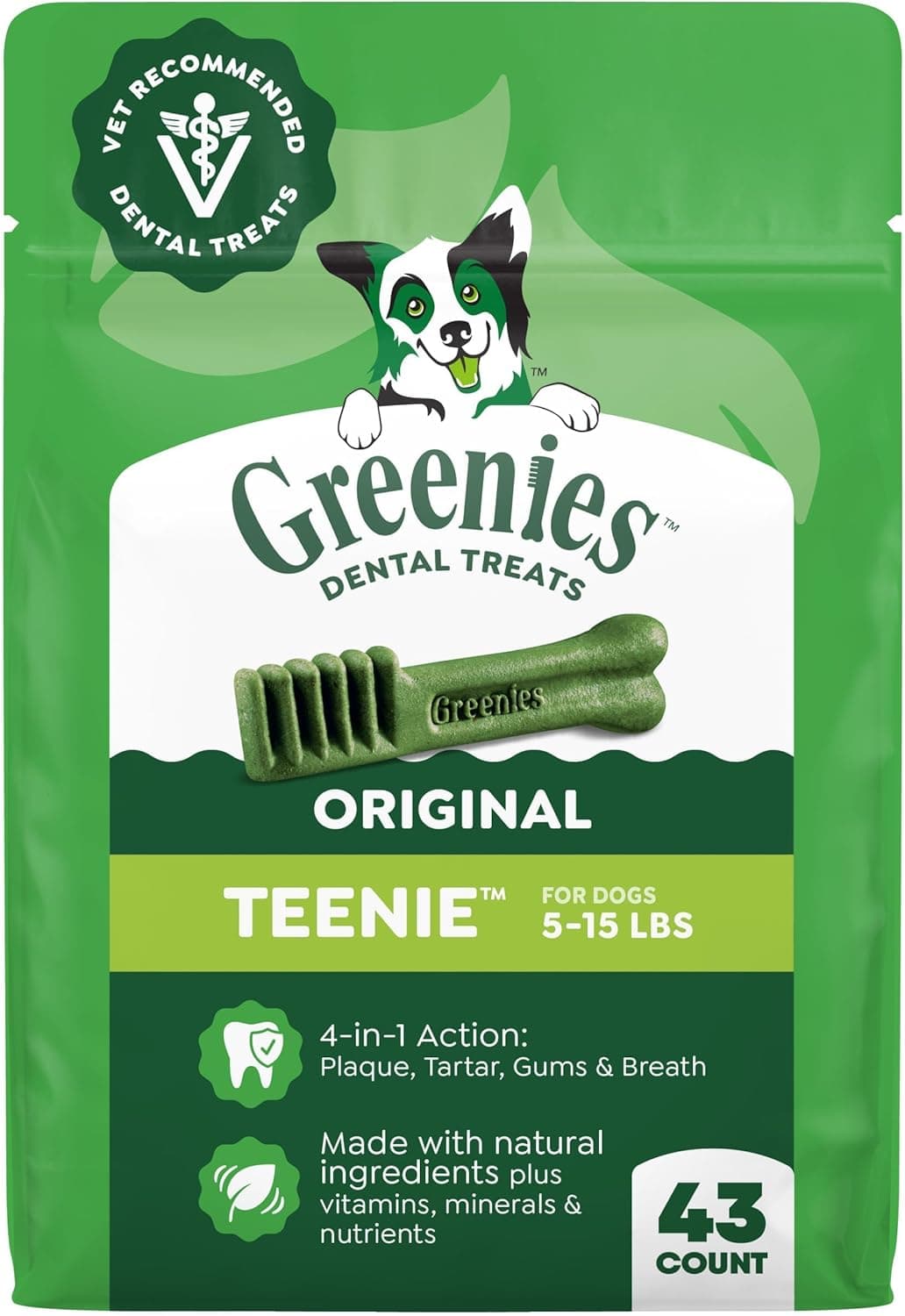
Greenies come in four weight-based sizes for adult dogs: Teenie (5–15 lbs, ~26 kcal), Petite (15–25 lbs, ~56 kcal), Regular (25–50 lbs, ~91 kcal), and Large (50–100 lbs, ~147 kcal). They are not suitable for dogs under 5 lbs or under 6 months of age. Getting the size right is the single most important safety step — a chew that's too small can be swallowed whole, while one that's too large may not break down properly during chewing. The Greenies official sizing guide recommends matching strictly to your dog's current weight, not the size you think they'll grow into. For small-breed owners in the 5–15 lb range, the Greenies Teenie Size, 43 Count is the correct match — you can also check current pricing on Amazon. Always supervise the first several chews with any new size to confirm your dog is chewing thoroughly rather than gulping. If your dog consistently swallows chews with minimal chewing, Greenies — or any dental chew — may not be a safe option regardless of size.
Calorie Math: Why the 10% Rule Matters
The American Animal Hospital Association (AAHA) and AAFCO recommend that treats should make up no more than 10% of a dog's total daily caloric intake. This is where Greenies catch some owners off guard. A Teenie-size Greenie at ~26 kcal is manageable for most small dogs — a 10-lb dog eating roughly 350 kcal/day has a 35-kcal treat budget, so one Teenie fits comfortably. But a Regular-size Greenie at ~91 kcal nearly fills the entire 10% treat allowance for a 50-lb dog consuming approximately 1,100 kcal/day, leaving almost no room for training treats or other rewards. Greenies' packaging acknowledges this, recommending you reduce your dog's main meal by the corresponding calorie amount (25 kcal for Teenie, 52 kcal for Petite, 88 kcal for Regular). If your dog is overweight or on a restricted diet, the Weight Management line offers lower-calorie options. The key takeaway: Greenies are a once-daily dental hygiene product, not a training treat. Count them in your dog's daily calorie budget, and adjust meal portions accordingly to avoid gradual weight gain.
Greenies vs. Minties: Cost, VOHC, and Ingredient Differences
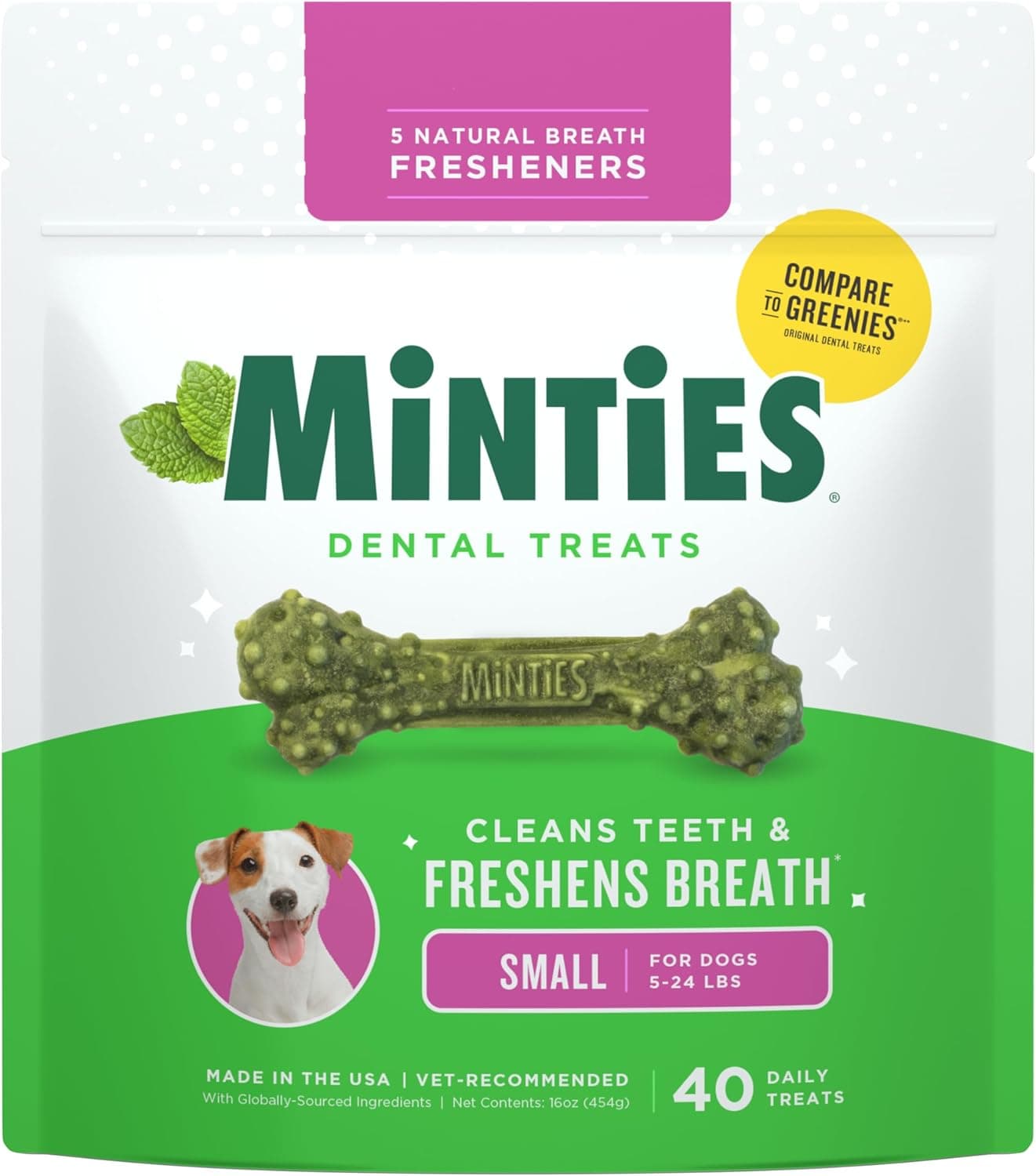
The most common budget alternative owners consider is Minties. On Amazon, Minties Tiny/Small dental chews run roughly $0.25 per chew in a 40-count bag, while Greenies Teenie typically costs $0.40–$0.42 per chew in the 43-count size — see our Minties product page for the internal comparison. The biggest functional difference: Minties do not carry VOHC acceptance, meaning their plaque and tartar reduction claims haven't been independently verified through the VOHC clinical trial review process. Minties are wheat-free, corn-free, and soy-free (rice flour-based), which may matter for dogs with specific sensitivities, though Greenies contain no BHA, BHT, or artificial flavors either. Minties do contain artificial colors (Yellow #5, Blue #1), while Greenies use fruit-juice-based coloring. For owners whose dogs have minimal dental risk and who prioritize breath freshening over clinically proven plaque reduction, Minties are a reasonable budget choice. For dogs with active tartar buildup or a vet recommendation for VOHC-accepted products, Greenies' higher cost reflects the clinical validation behind them.
When Greenies Aren't the Right Fit: Alternatives for Gulpers and Sensitive Dogs
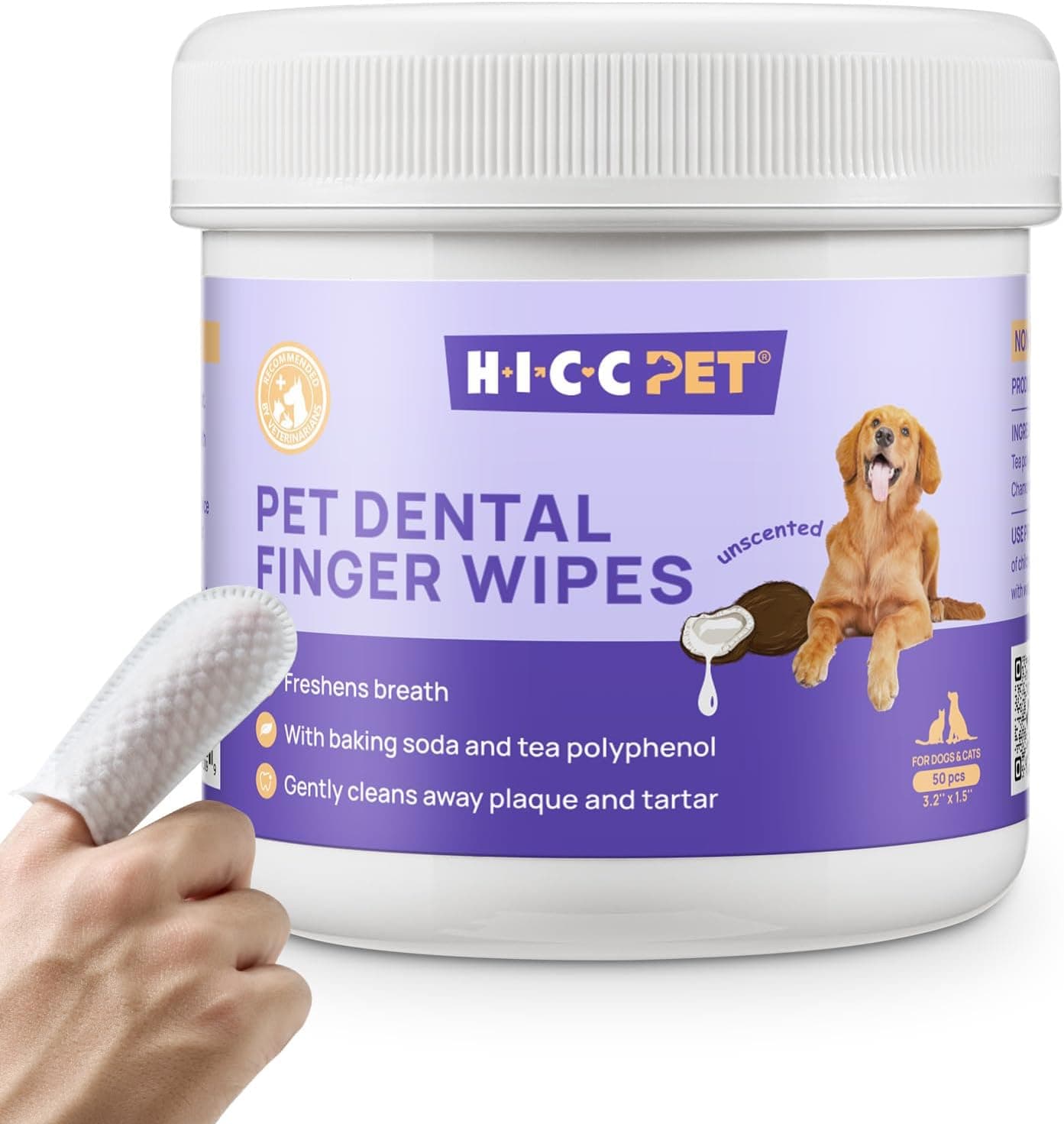
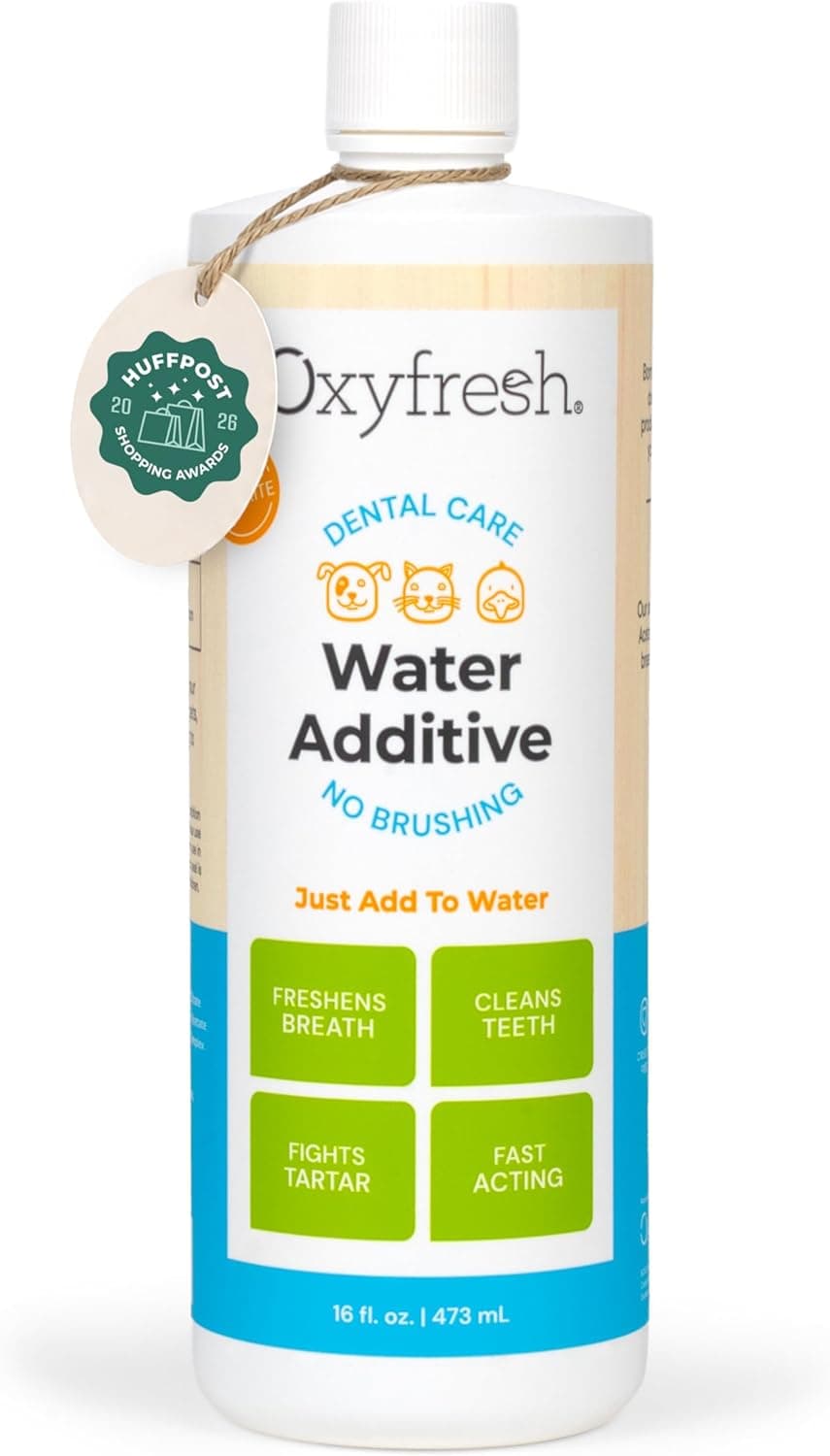
Not every dog should have dental chews. If your dog gulps treats whole, has missing teeth, advanced periodontal disease, or a history of GI obstruction, a chew-based product — even a reformulated one — may not be safe. For these dogs, HICC Pet Teeth Cleaning Wipes offer a hands-on alternative: you physically wipe the teeth rather than relying on the dog's chewing mechanics. This gives you full control and eliminates choking risk entirely. Another complementary approach is adding an Oxyfresh Premium Pet Dental Care Solution water additive to your dog's daily water bowl. While water additives alone won't match the mechanical cleaning action of a chew, they can serve as a secondary layer in a multi-product dental routine — or as the primary daily dental product for dogs who can't safely have chews. Some owners successfully combine a daily Greenie with a water additive for a two-pronged approach, though you should discuss this with your vet if your dog has kidney or urinary conditions. For dogs with no chewing issues at all, Greenies remain a solid, VOHC-accepted daily option.
Frequently asked questions
▶Are Greenies safe for dogs after the 2006 reformulation?
The current reformulated Greenies (since September 2006) use protein isolates designed for high solubility and digestibility. An independent University of Illinois study confirmed rapid breakdown in simulated digestive conditions. The manufacturer states there have been no reports of blockages since the reformulation. However, the packaging still warns that gulping any item can be harmful or fatal, so supervision and correct sizing remain essential.
▶What size Greenies should I get for my dog?
Match by current weight: Teenie for 5–15 lbs, Petite for 15–25 lbs, Regular for 25–50 lbs, and Large for 50–100 lbs. Greenies are not suitable for dogs under 5 lbs or under 6 months old. Always supervise the first few chews with a new size to confirm your dog chews thoroughly.
▶Do Greenies really reduce plaque and tartar?
Greenies carry the VOHC Seal of Acceptance for both plaque and tartar control, meaning they've demonstrated measurable reduction in controlled clinical trials submitted to the Veterinary Oral Health Council. The manufacturer reports company data showing 47% less tartar and 40% less plaque after 28 days of daily use, though this data is on file and not independently published.
▶Are Minties as good as Greenies?
Minties are more affordable (roughly $0.25 vs. $0.40+ per chew) and are wheat/corn/soy-free, but they do not carry VOHC acceptance, meaning their plaque and tartar reduction claims haven't been independently verified. For dogs with minimal dental risk, Minties may suffice for breath freshening. For dogs needing clinically validated plaque control, Greenies' VOHC seal is the differentiator.
▶Can I give my dog Greenies every day?
Yes, the manufacturer recommends one Greenies dental treat per day. However, each chew contains calories that count toward your dog's daily treat allowance (AAHA recommends treats stay under 10% of total daily calories). Reduce your dog's meal portions by the calorie amount listed on the Greenies package to avoid weight gain.
▶What should I do if my dog gulps Greenies without chewing?
Stop giving dental chews immediately. Dogs who swallow chews whole are at risk of esophageal or intestinal obstruction regardless of the product's digestibility. Consider alternatives like dental wipes (e.g., HICC Pet Teeth Cleaning Wipes) or a water additive (e.g., Oxyfresh) that don't rely on chewing mechanics, and consult your vet for a safe dental care plan.