Dog Dental Care · 9 min
Dog Dental Hygiene: Build a Daily Routine That Prevents Plaque and Gum Disease
Build a practical daily dog dental hygiene routine that prevents plaque and gum disease. Step-by-step brushing, chews, wipes, and water additives explained.
Introduction
If you've ever winced at your dog's breath and thought, *I really should be brushing their teeth* — you're not alone. According to the AVMA, periodontal disease affects nearly 80% of dogs by age three, yet only an estimated 2% of owners brush daily. The gap between knowing you should and actually building a routine is where most dog dental hygiene plans die. This guide closes that gap with a practical, layered daily routine you can stick to — even if your dog runs at the sight of a toothbrush. For a deeper dive into the full spectrum of at-home dental care, check out our complete owner's guide to dog dental care.
The key insight most owners miss: dog dental hygiene isn't one product or one habit — it's a *system*. Brushing is the gold standard, but chews, wipes, and water additives each play a supporting role. When you layer them strategically, you get real plaque disruption even on the days life gets busy. Let's build your routine.
Why Dog Dental Hygiene Can't Wait Until There's a Problem
Plaque begins forming on your dog's teeth within hours of eating. If not disrupted, it hardens into tartar within days — and once tartar forms, no at-home product can remove it. Only a professional veterinary cleaning under anesthesia can scale tartar above and below the gumline. The AVMA grades periodontal disease on a scale of 0 (normal) to 4 (severe), with bone loss becoming visible on X-rays as early as Stage 2. By the time you notice bad breath, visible tartar, or gum redness, disease may already be progressing below the surface. This is why the AVMA recommends annual oral exams and stresses that daily brushing is *the single most effective action* you can take at home. Prevention is dramatically cheaper than treatment — a 2013 VPI analysis found preventive dental care cost roughly one-third of treating preventable disease. To understand what happens when prevention fails, read our breakdown of dog dental disease treatment stages and vet procedures.
The 4-Layer Daily Routine: An Overview
Think of dog dental hygiene as four complementary layers, not a single silver bullet. Layer 1 — Brushing: The gold standard. Mechanical plaque disruption along the gumline, ideally daily or at minimum every 48 hours. Layer 2 — Wipes or finger brushing: For dogs who won't tolerate a traditional brush, dental wipes provide partial mechanical cleaning of accessible tooth surfaces. Layer 3 — Daily dental chew: A VOHC-accepted chew works on the teeth your dog uses to chew, helping reduce plaque and tartar between brushing sessions. Layer 4 — Water additive: A tasteless supplement that freshens breath and reduces bacterial load in the mouth throughout the day. No single layer replaces professional cleanings, and no layer replaces another entirely. But together, they create multiple daily touchpoints that keep plaque from settling and hardening. The Smart Pet Dental Shopper's Handbook walks through exactly which products are worth buying in each layer.
Layer 1: Brushing — The Gold Standard
Daily brushing with a dog-safe enzymatic toothpaste is the most effective at-home method for preventing plaque and tartar, according to the AVMA. Here's how to build the habit: Week 1 — Run a clean finger along your dog's gums daily at the same time (after dinner works well). No toothpaste yet. This builds tolerance. Week 2 — Let your dog lick enzymatic toothpaste off your finger, then introduce a finger brush on the outer surfaces of the back molars, where tartar accumulates fastest. Week 3 — Graduate to a soft-bristled dog toothbrush at a 45-degree angle to the gumline, using small circular motions. You only need to brush the outer (cheek-side) surfaces — saliva naturally cleans the inner surfaces. Aim for 30 seconds per side. Critical rules: Never use human toothpaste — xylitol and fluoride are toxic to dogs. Brush at least every 48 hours; less frequent brushing does not significantly reduce plaque biofilm. Always end with praise and a treat to reinforce the association. For product recommendations and technique details, see our complete guide to dog dental care.
Layer 2: When Your Dog Refuses the Toothbrush
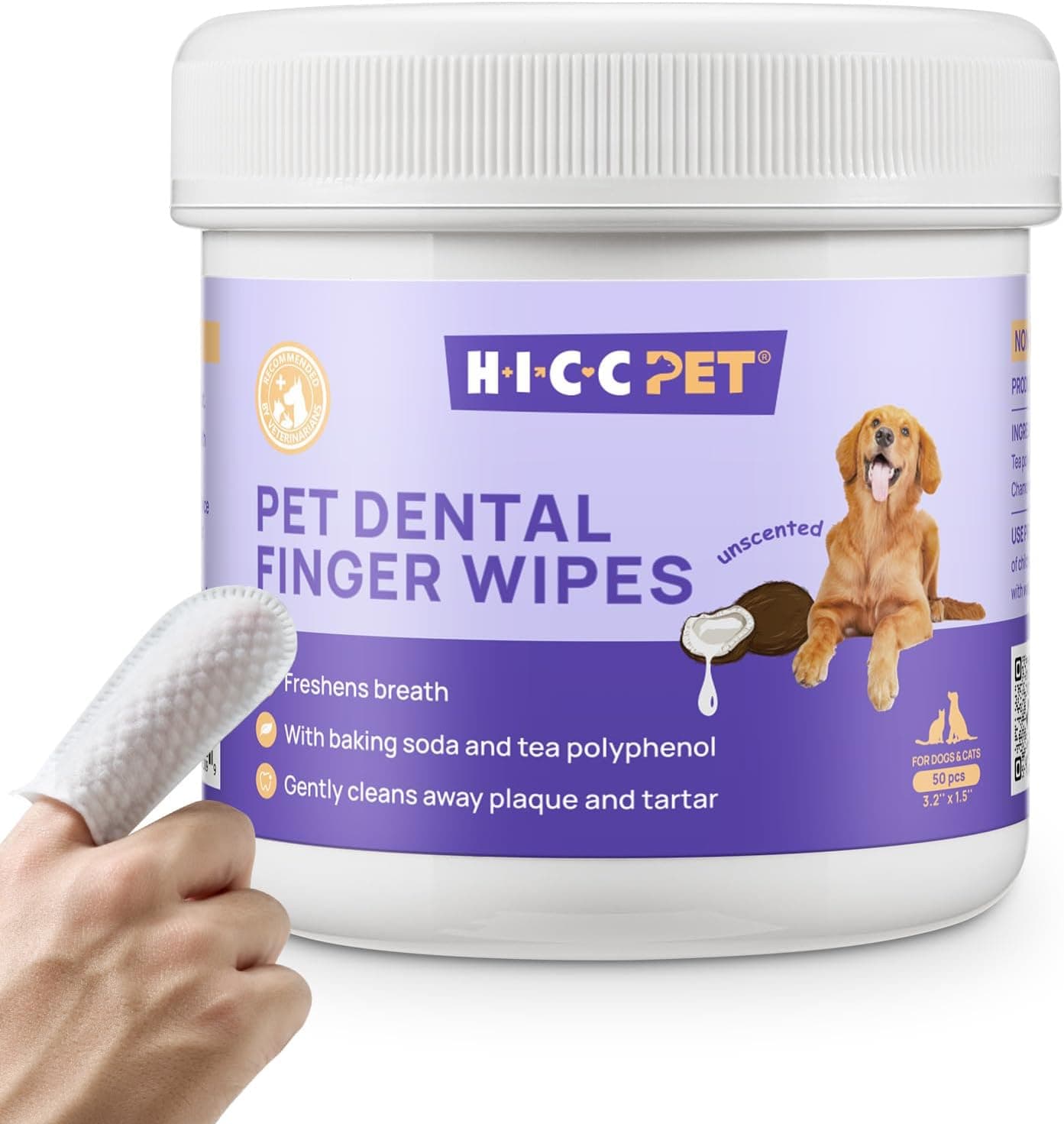
Some dogs will not accept a traditional toothbrush no matter how patiently you train. For these dogs, dental wipes are a legitimate supplementary tool — not a full replacement for brushing, but better than doing nothing. HICC Pet Teeth Cleaning Wipes are designed for daily use: you wrap the wipe around your finger and gently rub along the gumline and accessible tooth surfaces. The manufacturer states they're alcohol-free, paraben-free, and safe if licked or ingested, with no mint or tea tree oil (which can be harmful to pets). Important caveats: HICC wipes do not carry the Veterinary Oral Health Council (VOHC) seal, meaning their plaque-reduction claims haven't been independently verified through standardized clinical trials. Wipes also cannot reach below the gumline where periodontal disease develops. Use them as a daily maintenance step for dogs who resist brushes, and pair with professional cleanings. You can also find HICC Pet Teeth Cleaning Wipes on Amazon to compare pricing.
Layer 3: Daily Dental Chews That Actually Work
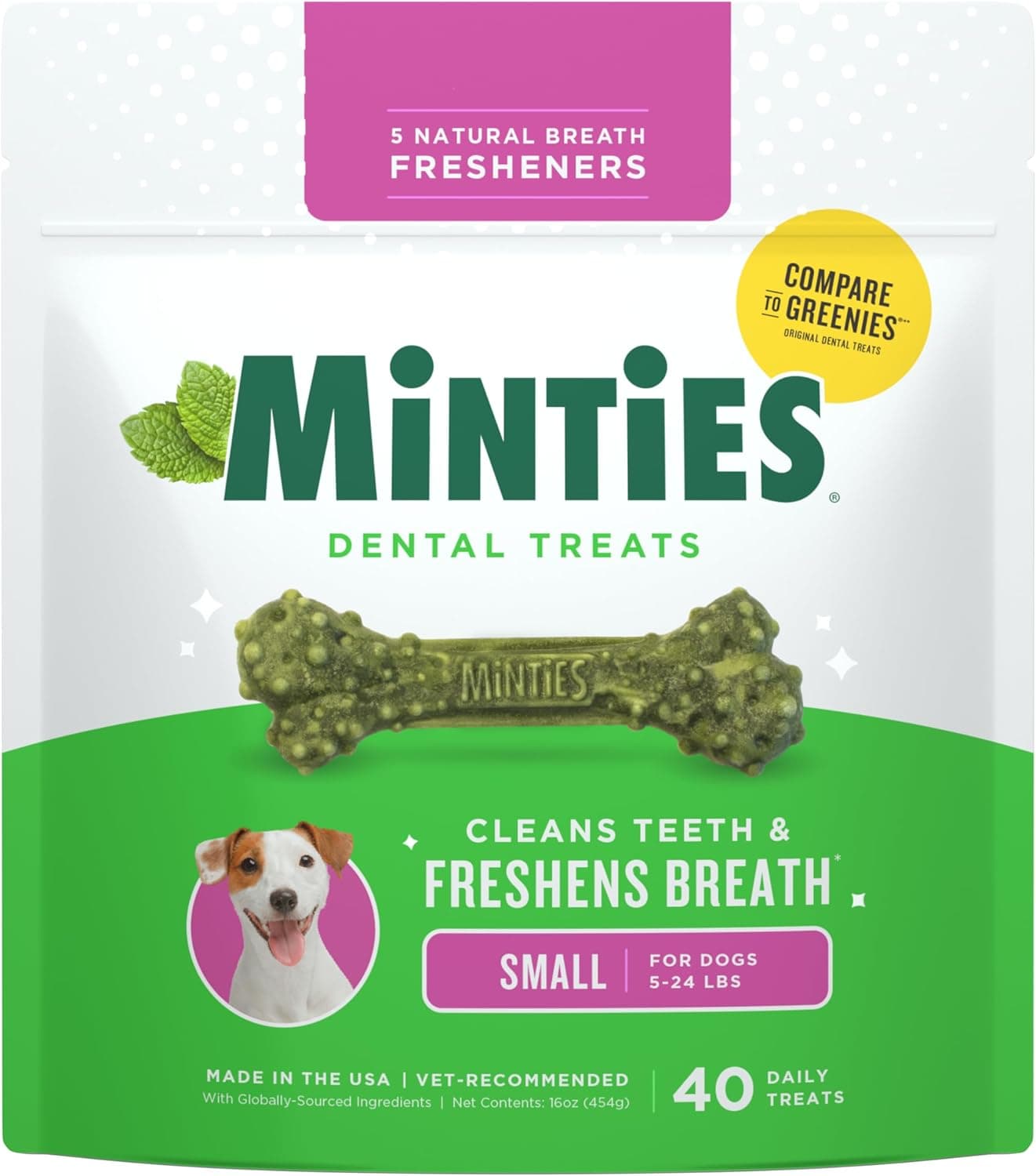
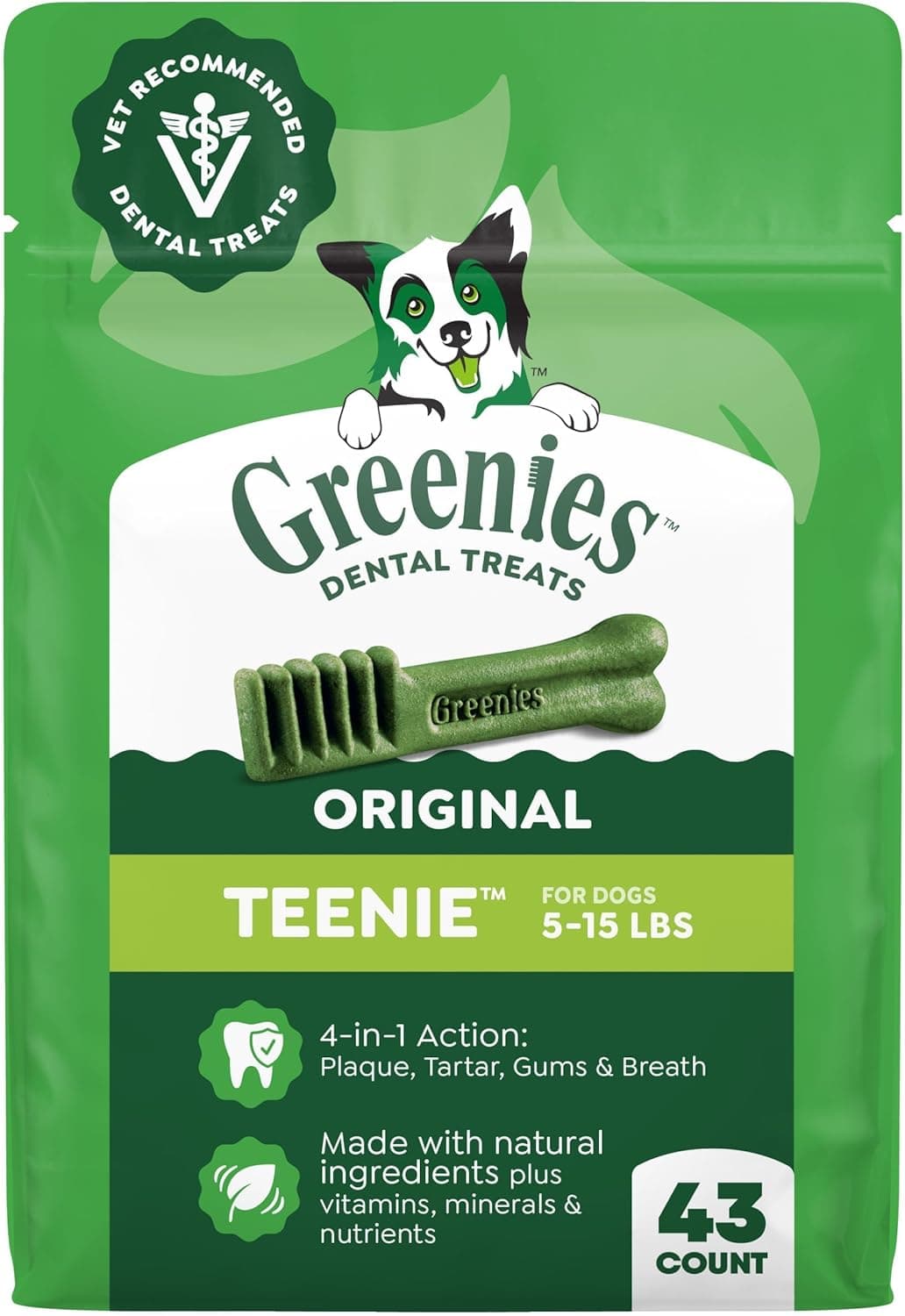
A daily dental chew gives your dog's teeth mechanical cleaning action on the surfaces they chew with — primarily the back molars and premolars. The key is choosing chews with the VOHC Seal of Acceptance, which means the product has passed two independent clinical trials demonstrating at least 20% reduction in plaque or tartar. Greenies Teenie Dental Dog Treats are VOHC-accepted for both plaque and tartar control (seal awarded 2007) and are sized for dogs 5–15 lbs. Feed one per day, and always monitor your dog while chewing — gulping any edible product can be dangerous. For a budget-friendly alternative, Minties Dog Dental Bone Treats in Tiny/Small are wheat-, corn-, and soy-free with five natural breath fresheners (alfalfa, peppermint, parsley, fennel, and dill). Note: Minties do not currently appear on the VOHC accepted products list, so their tartar-reduction claims lack independent clinical verification. They're a reasonable budget option but shouldn't be your only dental care layer. For a full comparison, read our Greenies dental treats buyer's guide. You can also compare Greenies Teenie prices on Amazon.
Layer 4: Water Additives — The Easy Compliance Layer
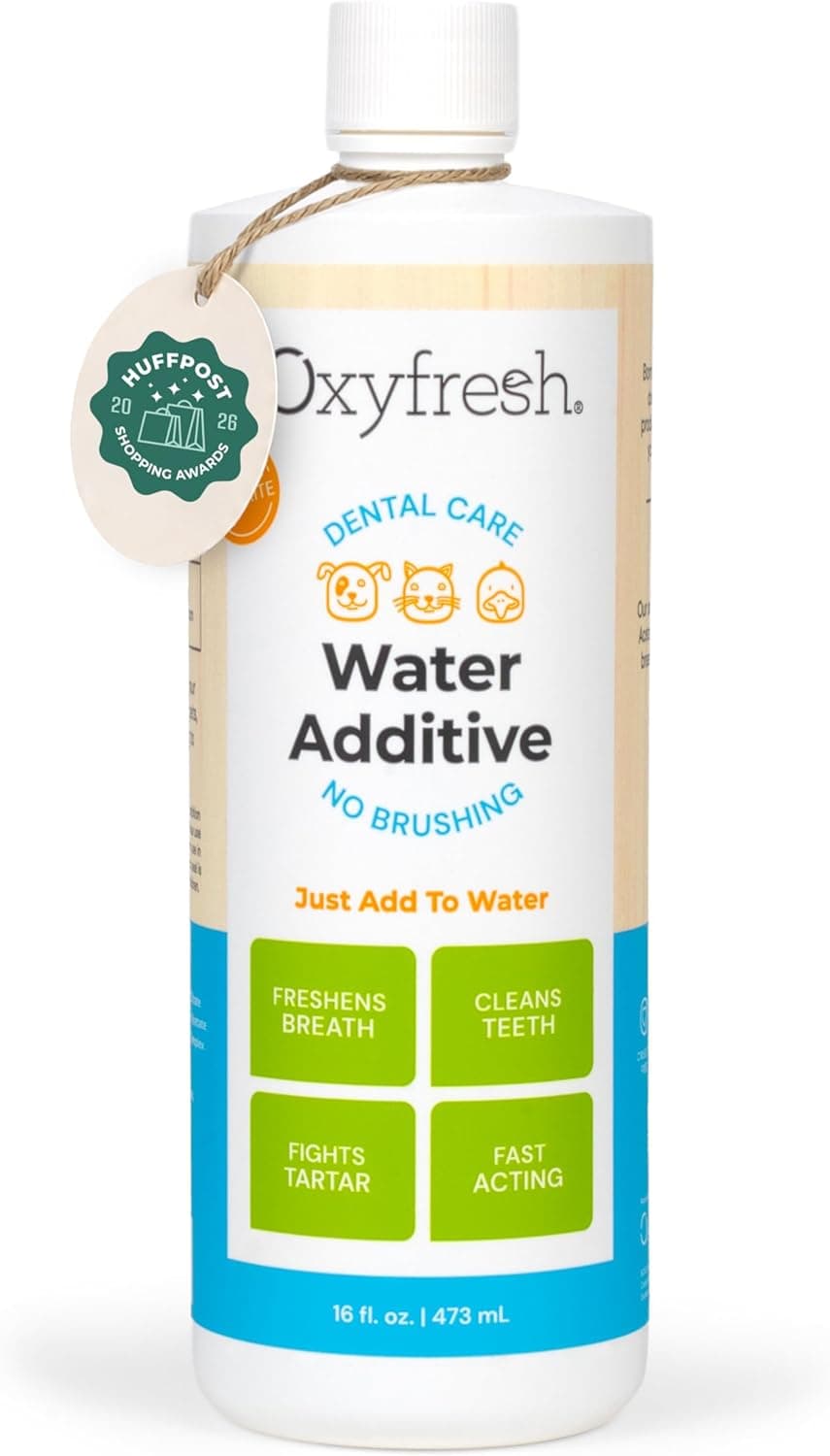
Water additives are the lowest-effort layer in your routine — you simply add a measured amount to your dog's water bowl each day. Oxyfresh Premium Pet Dental Care Solution uses stabilized chlorine dioxide (branded as Oxygene) to neutralize volatile sulfur compounds that cause bad breath and reduce bacterial load in the mouth. The manufacturer states it's tasteless and odorless, making it suitable for picky drinkers. What it can do: freshen breath within days and support daily oral hygiene maintenance. What it cannot do: remove existing tartar, reach below the gumline, or replace brushing and professional cleanings. Oxyfresh does not carry the VOHC seal — only one water additive brand (HealthyMouth) currently holds that distinction for plaque control. Two practical tips: if you use a pet water fountain with a carbon filter, remove the filter before adding Oxyfresh (carbon absorbs the active ingredient), and refresh the treated water daily for maximum effectiveness. Check current Oxyfresh pricing on Amazon to see if it fits your routine.
Weekly Check-In: What to Look For
Set a recurring reminder — Sunday evenings work well — to do a 60-second oral check. Lift your dog's lips and examine the gumline and teeth on both sides. Look for: brown or yellow tartar buildup along the base of the teeth (especially the upper back molars and canine teeth), red or swollen gums, broken or loose teeth, discoloration, and unusual odor beyond typical dog breath. Also watch for behavioral changes: dropping food, chewing on one side only, pawing at the mouth, or reluctance to eat hard food can all signal oral pain. The AVMA notes that pets often become irritable when they have dental problems, so any personality shift warrants a vet visit. Document what you see with a quick phone photo — comparing week to week helps you spot gradual changes you'd otherwise miss. If you notice tartar accumulating faster than expected, it may be time to adjust your routine or schedule a professional cleaning. Our guide to dog teeth cleaning costs in 2026 helps you budget for that visit.
Common Mistakes That Sabotage Your Routine
Even well-intentioned owners make preventable mistakes. Mistake 1: Using human toothpaste. Xylitol is highly toxic to dogs, and fluoride is unsafe for them to swallow. Always use enzymatic toothpaste formulated specifically for dogs. Mistake 2: Brushing less than every 48 hours and expecting results. Veterinary dental research indicates that brushing less frequently than every other day does not significantly reduce plaque biofilm. Mistake 3: Treating chews or water additives as a brushing replacement. The AVMA is clear that daily brushing is the single most effective at-home method. Chews and additives are supplementary layers, not substitutes. Mistake 4: Skipping annual vet oral exams. Most dental disease occurs below the gumline where you can't see it. Mistake 5: Choosing dental products without the VOHC seal and expecting clinical results. Products without the seal may still help with breath freshening, but their plaque and tartar claims haven't been independently verified. Mistake 6: Giving the wrong size chew. Always check the weight range on the package — a chew that's too small is a choking hazard, and one that's too large may not clean effectively.
When to Call the Vet
Don't wait for your annual exam if you notice any of these red flags: persistent bad breath that doesn't improve with routine care, visible tartar accumulation, red or bleeding gums, broken or loose teeth, reduced appetite, dropping food, excessive drooling, pawing at the mouth, or any swelling around the muzzle or jaw. These symptoms may indicate periodontal disease at Stage 2 or beyond, where bone loss is already occurring below the gumline. The AVMA explicitly does not recommend anesthesia-free dental cleanings, as they cannot address disease below the gumline and risk injury to your pet. A proper veterinary dental prophylaxis includes scaling, polishing, and dental X-rays under anesthesia — and most pets go home the same day. If cost is a concern, talk to your vet about payment plans or pet dental insurance options. Starting a consistent home routine now can significantly extend the interval between professional cleanings and reduce long-term costs. For help evaluating dental insurance coverage, grab our Pet Dental Insurance Playbook.
Frequently asked questions
▶How often should I brush my dog's teeth?
Daily brushing is ideal. At minimum, brush every 48 hours — veterinary dental research indicates that brushing less frequently than every other day does not significantly reduce plaque biofilm. The AVMA calls daily brushing the single most effective at-home action for preventing dental disease.
▶Can dental chews replace brushing?
No. Dental chews are a supplementary layer that helps reduce plaque and tartar on the teeth your dog chews with, but they don't clean all tooth surfaces or reach below the gumline. The AVMA identifies brushing as the gold standard. Use VOHC-accepted chews alongside brushing, not instead of it.
▶What is the VOHC seal and why does it matter?
The Veterinary Oral Health Council (VOHC) awards its Seal of Acceptance to products that have passed two independent clinical trials demonstrating at least 20% reduction in plaque or tartar. It's the most reliable independent benchmark for dental product efficacy. Products without the seal may still help with breath freshening, but their plaque and tartar claims haven't been clinically verified.
▶Are water additives safe and effective for dogs?
VOHC-accepted water additives like HealthyMouth have demonstrated plaque reduction in clinical trials. Other water additives, including Oxyfresh, do not carry the VOHC seal but may help freshen breath and reduce oral bacteria. They cannot remove existing tartar or reach below the gumline. Always follow dosing instructions, and if you use a carbon-filtered fountain, remove the filter before adding any water additive.
▶Can I use human toothpaste on my dog?
Never. Human toothpaste contains xylitol (highly toxic to dogs) and fluoride (unsafe for dogs to swallow). Always use enzymatic toothpaste formulated specifically for dogs, which is designed to be swallowed and comes in pet-friendly flavors like poultry or peanut butter.
▶What are the signs my dog already has dental disease?
Watch for persistent bad breath, visible tartar (brown or yellow buildup at the gumline), red or swollen gums, broken or loose teeth, reduced appetite, dropping food, excessive drooling, pawing at the mouth, or irritability. If you see any of these, schedule a vet visit — disease may already be progressing below the gumline where you can't see it.