Cat Care · 8 min
How to Train Your Cat to Use an Automatic Litter Box (Step-by-Step)
Step-by-step guide to training your cat to use an automatic litter box. Learn setup, scent transfer, safety tips, and troubleshooting for a smooth transition.
Introduction
Switching to an automatic litter box can save you from daily scooping, but cats are creatures of habit — and a sudden change to their bathroom routine can backfire. The good news? With a patient, structured approach, most cats adapt within one to two weeks. This guide walks you through every step, from unboxing to full automation, with safety tips and troubleshooting along the way.
If you're still comparing models, our best self-cleaning litter boxes under $400 guide covers top options for first-time buyers. Already have your box? Let's get your cat on board. For a deeper dive into one of our top-recommended models, check out the PETKIT PuraMax 2 deep cleaning guide for maintenance tips after training is complete.
Before You Start: Choose the Right Box and Location
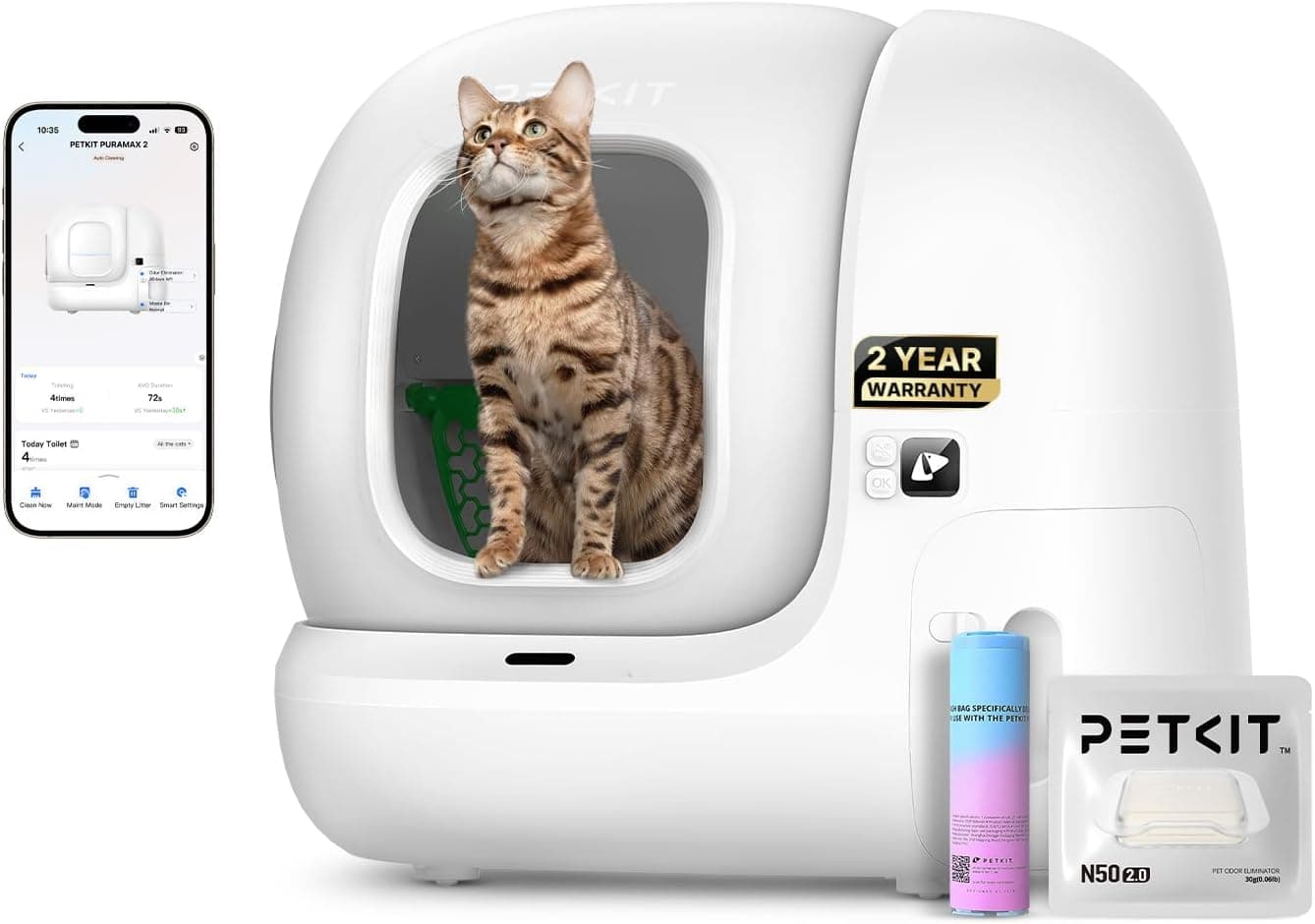
Not every automatic litter box suits every cat. The most common reason cats reject a new box isn't the cleaning mechanism — it's that the box is uncomfortable to enter, stand in, or exit. Look for a model with a low entry threshold (especially important for senior cats or short-legged breeds), adequate interior space for your cat to turn around, and multiple safety sensors that prevent the cycle from running while your cat is inside. The PETKIT PuraMax 2 features a 7.87-inch low-entry design and 11 safety sensors, making it a solid choice for first-time automatic litter box buyers. You can also browse self-cleaning litter boxes on Amazon to compare options.
Before unboxing, decide on a permanent location. Cats form strong location habits around their litter box, and moving it even a few feet after acceptance can trigger avoidance. Choose a quiet, low-traffic spot away from food, water, and noisy appliances. If the permanent spot differs from where the old box currently sits, place the new box at the old location first and gradually shift it over several days once your cat is using it reliably. For guidance on boxes suited to older or smaller cats, see our best automatic litter boxes for small cats and senior cats.
Step 1: Set Up the Box Unplugged Next to the Old One
Place your new automatic litter box directly next to your cat's existing box. Do not plug it in or enable any automatic cycling yet. The goal is to let your cat investigate this new object as a piece of furniture — no sounds, no movement, no pressure. Fill the new box with the same litter your cat already uses. Most automatic boxes require clumping litter (clay or tofu-based), so if your current litter isn't compatible, transition to the new litter in the old box first before introducing the automatic unit.
Add a scoop of soiled litter from the old box into the new one. Cats identify their bathroom by scent, not sight, and this scent transfer signals that the new box is a sanctioned toilet. Give your cat at least three to five days to explore, sniff, and ideally use the new box on their own terms. Never force your cat into the box — this can create a negative association that's hard to undo. If your cat is particularly skittish, place treats or a sprinkle of catnip near (not in) the box to build positive associations.
Step 2: Wait for Consistent Use Before Turning It On
Once your cat has used the new box voluntarily at least two or three times, you can introduce the automatic feature. But don't rush — the biggest mistake owners make is enabling auto-cycling before the cat has formed a habit with the new box. When you're ready, plug in the unit and run a manual cleaning cycle while your cat is in another room. This lets you confirm the mechanism works correctly and lets your cat hear the sound from a safe distance.
Most quality automatic boxes let you set a delay between your cat exiting and the cleaning cycle starting. Start with a longer delay — eight to ten minutes — so a cat who circles back won't be startled by an active mechanism. You can shorten it later once your cat is comfortable. The PETKIT PuraMax 2 operates at approximately 35 dB, which is roughly the volume of a whisper, so most cats adjust to the sound within a few cycles. If your cat startles and steps back but then returns to investigate, that's normal curiosity, not rejection. See the PETKIT PuraMax 2 on Amazon for current pricing and specs.
Step 3: Keep Both Boxes Available During Transition
Do not remove the old litter box yet. Keep both boxes available for at least one to two weeks, cleaning the old box slightly less frequently than usual. Cats prefer a clean place to go, so the always-clean automatic box becomes more attractive while the old box becomes less appealing. This natural preference shift does the convincing for you.
For multi-cat households, follow the N+1 rule: one litter box per cat plus one extra. If you have two cats and one automatic box, keep at least one traditional box as a fallback during the transition. Place boxes at least five to ten feet apart so a dominant cat can't ambush a submissive cat at the entry. Once all cats are using the automatic box consistently for several days, you can gradually move the old box to a less convenient location and eventually remove it. For ongoing maintenance after the transition, our PETKIT PuraMax 2 deep cleaning guide covers tips, tricks, and shortcuts.
Step 4: Monitor, Reward, and Go Fully Automatic
Once your cat is using the automatic box reliably and doesn't react negatively to the cleaning cycle, you can switch to full automatic mode. Use the companion app (if your box has one) to track usage frequency, duration, and weight data. Sudden changes in litter box habits — like visiting more frequently, straining, or avoiding the box — can signal a health issue, so monitoring is valuable beyond just confirming the transition worked.
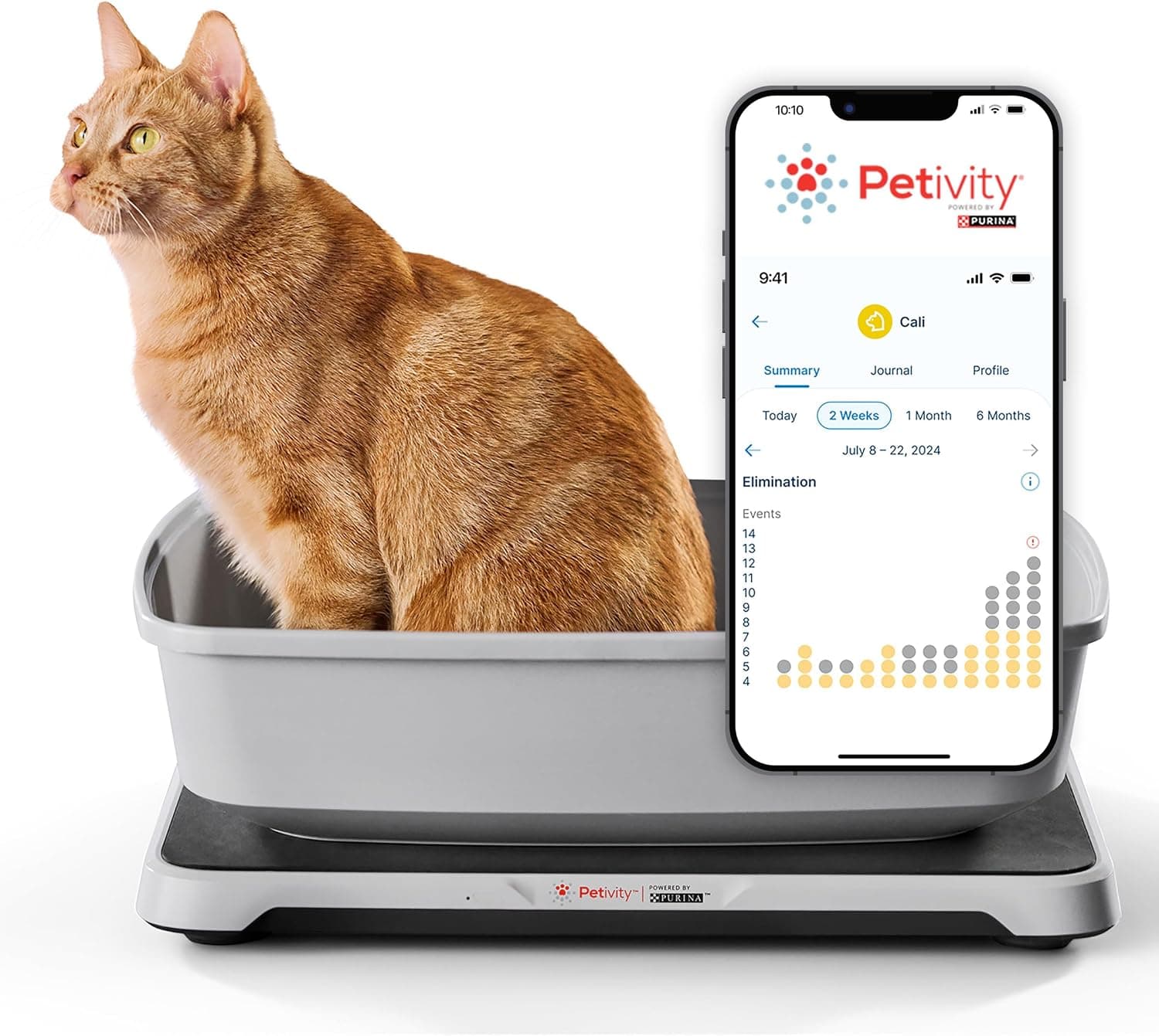
Reward your cat with treats, praise, or play when you catch them using the new box. Positive reinforcement speeds up the process. If your cat regresses at any point — for example, after a loud cycle or a change in household routine — revert to manual mode for a few days and restart the gradual introduction. Most cats fully transition within two to three weeks, but some may take longer. Patience is the single most important factor. If you're considering adding a smart monitor for extra health tracking, the Petivity Smart Litter Box Monitor can complement your automatic box by logging weight and visit data.
Safety Considerations: Who Should NOT Use an Automatic Box
Automatic litter boxes are safe for most healthy adult cats, but certain cats should wait or avoid them entirely. Kittens under the minimum weight threshold (typically 3 to 3.3 pounds depending on the model) are too light to reliably trigger weight sensors, which means the cleaning cycle could run while the kitten is still inside. The PETKIT PuraMax 2 requires a minimum weight of 1.5 kg (3.3 lbs) and offers a Kitten Protection Mode that disables auto-cleaning entirely — but even with this feature, kittens under six months should be supervised.
Cats with severe mobility issues, advanced arthritis, or recent surgery may struggle with entry height or feel trapped inside enclosed models. If your senior cat is avoiding their current box, consult a veterinarian to rule out arthritis or other medical issues before investing in an automatic box. Cats with severe anxiety or claustrophobia — especially those who have historically refused covered boxes — may do better with open-top automatic models rather than enclosed globe-style units. For more on choosing the right box for older or mobility-limited cats, see our best automatic litter boxes for small cats and senior cats guide.
Troubleshooting: When Your Cat Won't Use the New Box
If your cat refuses the automatic box, work through these common causes one at a time. First, check entry height — if your cat approaches, pauses at the opening, and walks away, the step-up may be too high. Second, verify the litter type matches what your cat is used to. Third, confirm the auto-cycle didn't run while your cat was nearby and startle them — if so, revert to manual mode and increase the delay timer. Fourth, check for sensor issues: dust on infrared lenses or overfilled litter can cause false readings or failed cycles.
If the box smells despite auto-cleaning, the waste drawer may need emptying more frequently, or the inner drum may have residue buildup — do a full disassembly clean and refill with fresh litter at the manufacturer's recommended depth (typically around three inches). If your cat was using the box and suddenly stops, rule out medical causes first: straining, crying in the box, or urinating outside it can signal urinary tract issues that require veterinary attention. Don't assume a litter box problem is purely behavioral until pain has been ruled out. For more product options and comparisons, browse automatic cat litter boxes on Amazon.
Frequently asked questions
▶How long does it take to train a cat to use an automatic litter box?
Most cats adapt within one to two weeks with a gradual approach. Some confident cats may transition in a few days, while skittish or older cats may need three weeks or more. The key is letting your cat set the pace — never force them into the box or enable auto-cycling before they've used it voluntarily.
▶Can kittens use an automatic litter box?
Most manufacturers recommend waiting until a kitten reaches a minimum weight — typically 3 to 3.3 pounds. Below this threshold, weight sensors may not reliably detect the kitten, creating a safety risk. Some models, like the PETKIT PuraMax 2, offer a Kitten Protection Mode that disables auto-cleaning. Always supervise kittens and keep a traditional box available as a fallback.
▶What type of litter works best in an automatic litter box?
Most automatic litter boxes require clumping litter — typically fine to medium-grain unscented clumping clay or tofu-based litter. Non-clumping litter, crystals, silica gel, and some lightweight plant-based litters don't form solid clumps the mechanism can separate. Always check your specific model's litter compatibility before filling.
▶My cat was using the automatic box but suddenly stopped. What should I do?
First, rule out medical issues — straining, crying in the box, or urinating outside it can signal urinary tract problems that need veterinary attention. If health is ruled out, check for sensor malfunctions, litter depth, recent loud cycles that may have startled your cat, or changes in household routine. Revert to manual mode and restart the gradual introduction if needed.
▶Can multiple cats share one automatic litter box?
One automatic box can often serve two cats since it stays clean after each use, but the traditional N+1 rule (one box per cat plus one extra) still applies during the transition period. Keep at least one traditional box as a fallback, place boxes apart to prevent ambush behavior, and use the companion app to confirm all cats are using the new box before removing old ones.