Self-Cleaning Litter Boxes · 8 min
Best Automatic Litter Boxes for Small Cats and Senior Cats (2026)
Compare the best automatic litter boxes for small cats and senior cats in 2026. Entry height, safety sensors, weight range, and real owner experiences.
Introduction
If you're already juggling dog walks, feeding schedules, and training sessions, the last thing you want is to add daily litter scooping to the list. For busy multi-pet households, an automatic litter box can take one chore completely off your plate — but only if your cat will actually use it. Small cats and senior cats have unique needs that many popular models overlook: a low enough entry step, reliable weight sensors for lighter bodies, and an interior that doesn't feel like a cramped cave. You can browse more viral pet finds on our site, or jump straight to our smart pet care framework if you're building a full hands-off routine.
This guide compares three automatic litter boxes that work well for small or senior cats, with a close look at entry height, safety features, and real-world usability. We focus on models from established brands with documented safety systems, because cheap unbranded imports have been linked to sensor failures and injuries. Whether your cat is a petite adult, an arthritic senior, or somewhere in between, the right choice comes down to three measurements: entry height, weight range, and interior space.
Why Entry Height Is the Dealbreaker for Small and Senior Cats
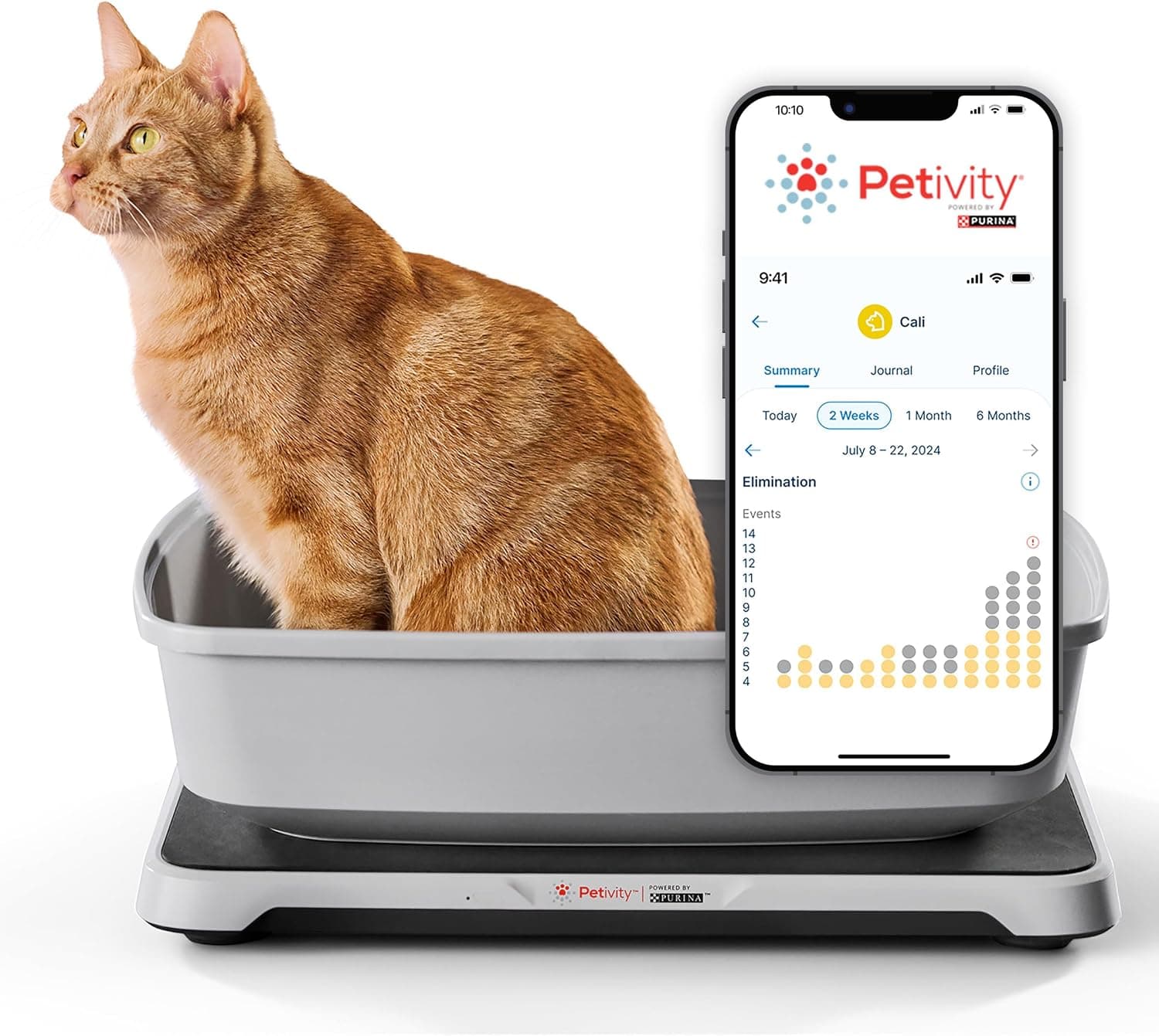
Most automatic litter boxes have an entry threshold between 7 and 15 inches. For a healthy adult cat, that's a small hop. For a senior cat with arthritis or a small cat with short legs, it can be the difference between using the box and finding a corner of your rug instead. Veterinary sources note that litter box avoidance is one of the most common early behavioral signs of arthritis in older cats, and a high step-up is often the culprit. For cats with moderate arthritis, an entry height under 5 inches is ideal; for early-to-moderate cases, something in the 7-to-8-inch range can still work. If your senior cat is already avoiding their current box, a vet exam should come before any purchase — arthritis is treatable, and no litter box solves an undiagnosed pain problem. When comparing models, measure the entry height yourself rather than relying on marketing language like "low entry" or "easy access." The number that matters is the distance from the floor to the bottom of the opening your cat steps through. You can pair any automatic box with a Petivity Smart Litter Box Monitor to track visit frequency and catch health changes early.
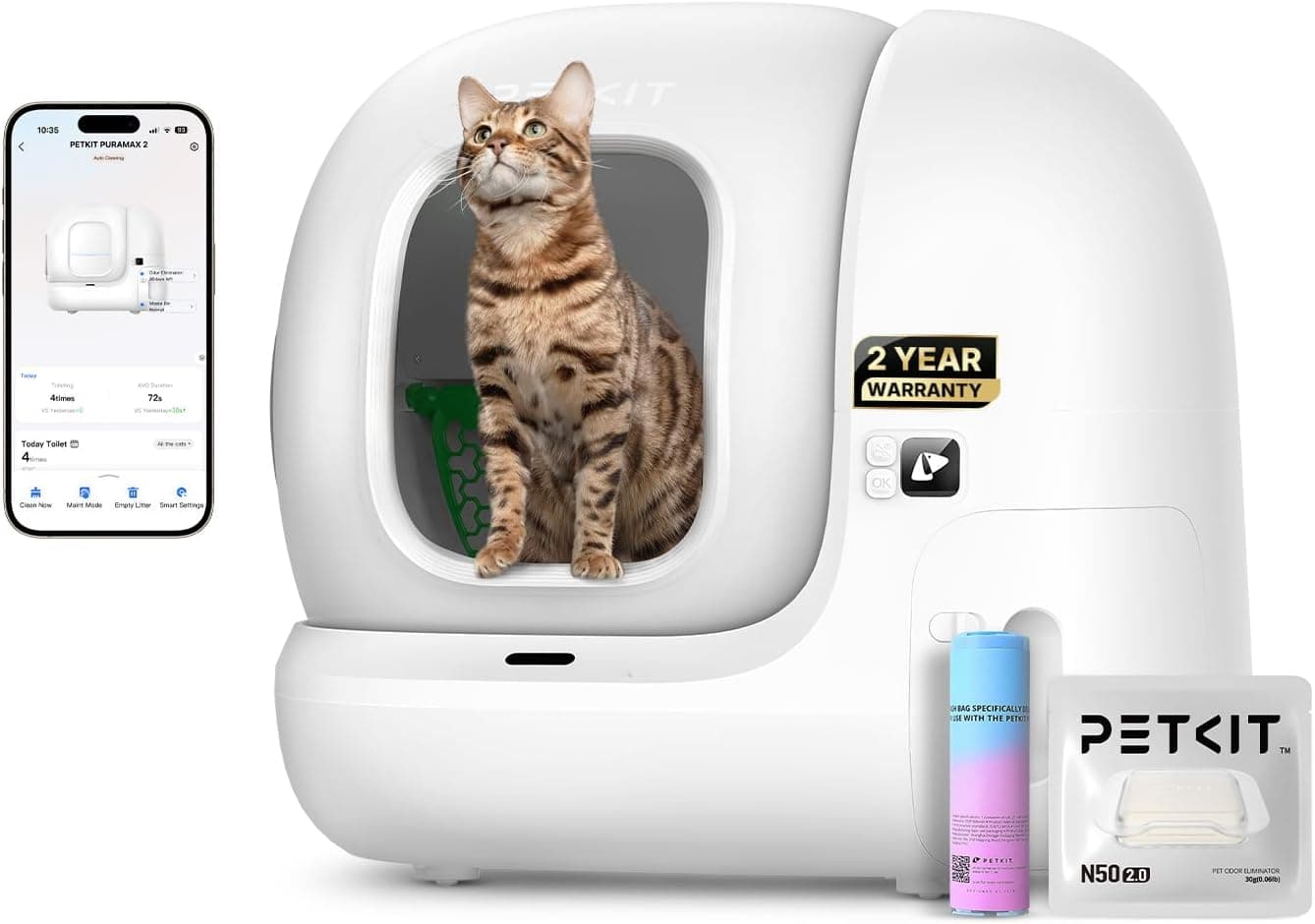
Top Pick: PETKIT PuraMax 2 — Lowest Enclosed Entry in Its Class
The PETKIT PuraMax 2 stands out for one reason that matters more than any app feature: its 7.87-inch entry height is among the lowest of any enclosed smart litter box on the market. That makes it accessible for many senior cats with early-to-moderate arthritis and for small-breed adults who struggle with taller thresholds. The PuraMax 2 supports cats from 3.3 to 22 pounds, so it covers everything from a petite 4-pound adult to a mid-size Maine Coon. Safety is handled by 11 sensors — 7 infrared plus 4 weight sensors — providing redundant detection so if one system misses your cat, the other should catch it. The entrance stays open during the entire cleaning cycle thanks to an anti-pinch structure, which is the single most important safety design feature to look for. The 7-liter sealed waste bin can go up to about 15 days between emptying for a single cat, and the included N50 odor eliminator helps keep smells contained. It works with all clumping litters (clay, tofu, or crystal), so you're not locked into a proprietary refill system. One important caveat: the PuraMax 2 must sit on a hard, flat floor — carpet interferes with the weight sensors. It also only connects to 2.4GHz Wi-Fi, which can be a setup headache if your router defaults to 5GHz. If this sounds like the right fit, you can check the current price on Amazon and read more in our PuraMax 2 product page.
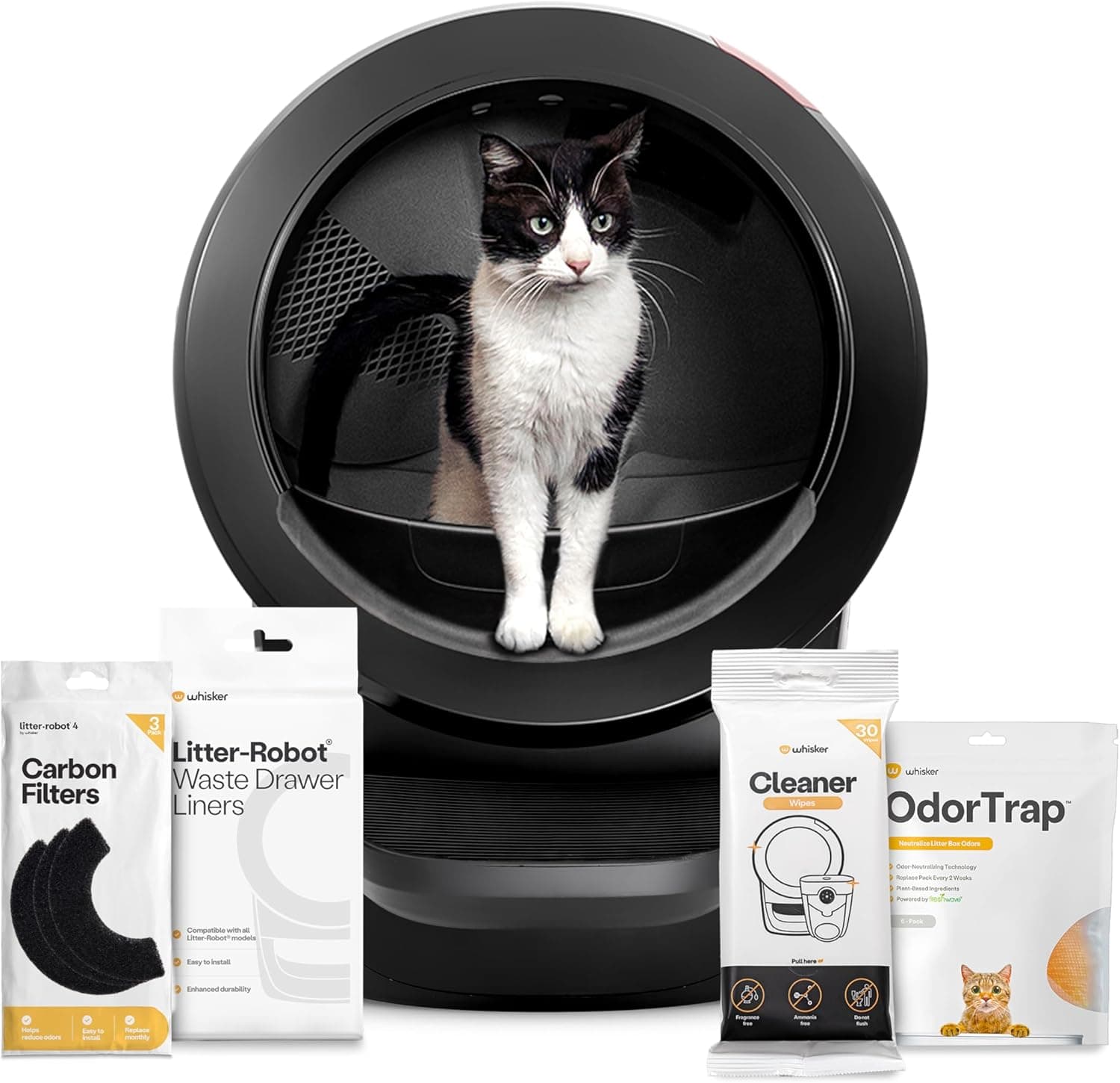
Premium Alternative: Litter-Robot 4 — Spacious, Repairable, and Proven
The Whisker Litter-Robot 4 is the most field-tested automatic litter box available, with over 1.8 million users and a Wirecutter top-pick designation. Its 15.75-by-15.75-inch entryway is the largest of any enclosed model, and the interior globe is spacious enough for most cats to turn around comfortably. There's no published upper weight limit, though cats must weigh at least 3 pounds to trigger the automatic-mode sensor. For senior cats, the entry height is higher than the PuraMax 2 — the globe sits on a base that puts the threshold around 10 to 12 inches depending on configuration. Whisker sells a ramp accessory that lowers the effective step to under 4 inches, which is worth adding if your cat has any mobility issues. The Litter-Robot 4 supports up to 4 cats, includes a sealed carbon-filtered waste drawer, and offers a 90-day in-home trial so you can return it if your cat refuses. Whisker is also the only manufacturer that offers replacement parts for DIY repairs, which extends the lifespan significantly. At $699 retail, it's a serious investment, but bundles that include the ramp, mat, and odor refills are available on Amazon with the ramp bundle. If you want the full breakdown, see our Litter-Robot 4 Supply Bundle review.
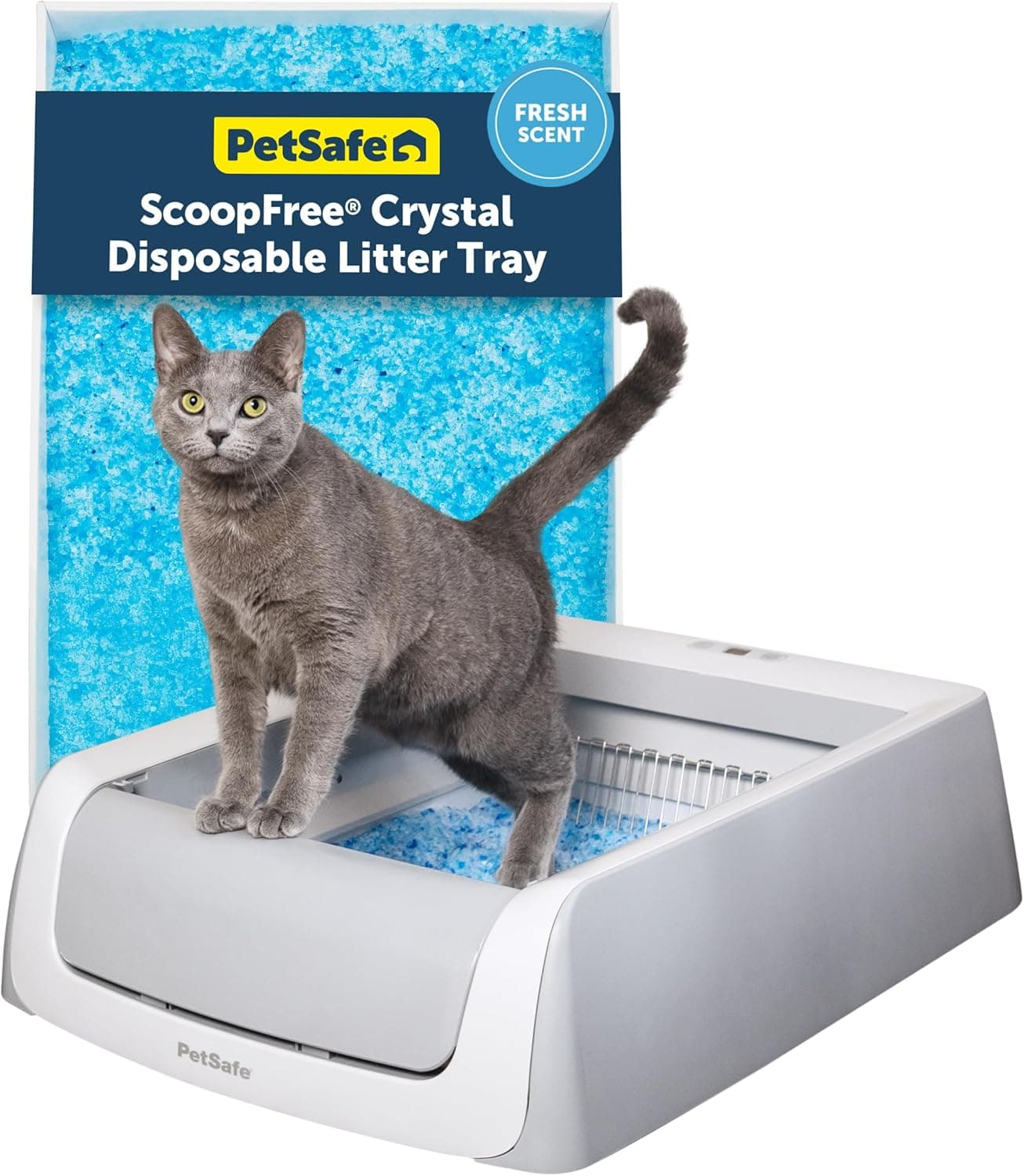
Budget Open-Top Option: PetSafe ScoopFree — Simple and Low-Profile
If your cat refuses enclosed spaces or you want the lowest possible entry point without spending $300-plus, the PetSafe ScoopFree is worth a look. The open-top design sits just 6.2 inches tall, making it one of the most accessible automatic boxes for small cats and seniors with mild mobility concerns. The ScoopFree uses a rake-based system: 20 minutes after your cat exits, a stainless-steel rake sweeps solid waste into a covered trap. Detection sensors reset the timer if your cat re-enters during the countdown. The trade-off is that the ScoopFree only works with PetSafe's proprietary crystal litter trays — you can't use clumping clay or tofu litter. Those disposable trays cost roughly $15 to $20 each and last about 2 to 4 weeks for a single cat, so there's an ongoing cost to factor in. PetSafe recommends the ScoopFree for cats under 15 pounds and advises keeping the unit unplugged for kittens under 6 months. The open design means less odor containment than sealed systems, but many cats prefer the open-top layout and adapt to it faster. You can check ScoopFree pricing on Amazon or read more on our PetSafe ScoopFree product page.
Safety Checklist: Four Features Every Automatic Litter Box Must Have
Before buying any automatic litter box — regardless of brand or price — confirm it has all four of these safety features. First, cat-presence detection: a weight scale, infrared sensor, or motion sensor that prevents the cleaning cycle from running while your cat is inside. Second, a delayed cycle start of at least 3 to 15 minutes after your cat exits, so a cat who circles back is detected before rotation begins. Third, pinch protection: mechanical bars or torque sensors that stop the cycle if any resistance is met. Fourth, an open entry that never closes during the cycle — this is the most critical feature, as boxes that mechanically close the entrance have been linked to the most serious injuries. All three models covered in this guide meet these criteria. Avoid cheap unbranded imports sold under generic Amazon listings, which often lack published safety specifications. For kittens under 3 pounds, most weight-based sensors cannot reliably detect them — use a traditional shallow-sided box until your kitten reaches the manufacturer's minimum weight. The PuraMax 2 offers a Kitten Protection Mode in its app that disables automatic cycling entirely, which is a useful safeguard if you have both kittens and adults in the household.
Transitioning Your Cat (and Keeping Your Dog Away)
Even the best automatic litter box is useless if your cat won't use it. Place the new unit next to your cat's current box and leave both available for at least a week. Add a scoop of used litter from the old box to the new one so it smells familiar. Keep the automatic cleaning cycle turned off for the first few days — let your cat explore the unit without any movement or noise. Once your cat is using it consistently, enable automatic mode and monitor their reaction. Some cats are startled by the cycling sound initially but adapt within a few weeks. If you have a dog who's curious about the litter box (a common issue in multi-pet homes), position the unit in a space the dog can't reach, or use a baby gate with a cat-sized opening. Automatic boxes with sealed waste drawers are particularly helpful in dog households because they eliminate the accessible waste that draws dogs to traditional boxes. For a comprehensive approach to managing all your pets' routines, our 24-Hour Smart Pet Care Framework walks through scheduling, monitoring, and automation across dogs and cats. You can also explore our [homepage](/) for more product reviews and buying guides tailored to multi-pet families.
Frequently asked questions
▶What is the best automatic litter box for senior cats with arthritis?
The PETKIT PuraMax 2 has one of the lowest enclosed entry heights at 7.87 inches, making it a strong choice for senior cats with early-to-moderate arthritis. For cats with more severe mobility issues, consider an open-top model like the PetSafe ScoopFree (6.2 inches tall) or add a ramp accessory to the Litter-Robot 4, which lowers the effective step to under 4 inches. Always consult your vet before switching boxes if your cat has diagnosed arthritis.
▶Can kittens use automatic litter boxes safely?
Most automatic litter boxes require a minimum cat weight of 3 to 3.3 pounds to reliably trigger their safety sensors. Kittens under 6 months or below that weight threshold should use a traditional shallow-sided box. The PETKIT PuraMax 2 offers a Kitten Protection Mode in its app that disables automatic cycling, allowing you to use the unit in manual mode until your kitten is heavy enough.
▶Are automatic litter boxes safe for small cats?
Yes, as long as the cat meets the manufacturer's minimum weight requirement and the box has all four critical safety features: cat-presence detection, a delayed cycle start, pinch protection, and an open entry that never closes during cycling. All three models covered in this guide — the PETKIT PuraMax 2, Litter-Robot 4, and PetSafe ScoopFree — meet these criteria. Avoid cheap unbranded imports that may lack adequate safety sensors.
▶How much does a good automatic litter box cost in 2026?
Prices range from about $200 for the PetSafe ScoopFree Crystal Plus to $699 for the Litter-Robot 4. The PETKIT PuraMax 2 typically retails around $300 to $460 depending on sales. Keep in mind that the ScoopFree requires ongoing purchases of proprietary crystal litter trays (roughly $15 to $20 each), while the PuraMax 2 and Litter-Robot 4 work with standard clumping litter.
▶Can I put an automatic litter box on carpet?
Most automatic litter boxes with weight sensors require a hard, flat surface. The PETKIT PuraMax 2 explicitly warns against carpet placement because it can cause false sensor readings and malfunctions. The Litter-Robot 4 offers an optional carpet tray accessory that allows placement on soft surfaces. Check your model's manual before installation.