Cat Care · 8 min read
Best Self-Cleaning Litter Boxes Under $400 (2026 Guide)
Compare the best self-cleaning litter boxes under $400 in 2026. Top picks, safety features, and honest pros & cons for budget-conscious cat parents.
Introduction
If you've looked at the Whisker Litter-Robot 4 and balked at the $699 price tag, you're not alone. Plenty of cat parents want the scoop-free life without dropping premium money — and the good news is that 2026 has brought several legitimate options under $400 that actually work. The key is knowing which models have real safety engineering and which ones cut corners.
In this guide, we compare four self-cleaning litter boxes that land under $400, with the PETKIT PuraMax 2 as our top pick for its balance of safety sensors, odor control, and multi-cat capacity. We also cover what safety features matter most, which cats should avoid automatic boxes, and how to introduce your cat without stress. You can browse more viral pet finds or jump straight to our smart pet care guides for deeper reading.
Why $400 Is the Sweet Spot in 2026
The self-cleaning litter box market has shifted dramatically. Two years ago, anything under $500 felt like a gamble with questionable safety sensors and flimsy construction. Today, brands like PETKIT, Catlink, and Neakasa have closed the gap with features that used to be exclusive to the $699 Litter-Robot 4 — including weight sensors, infrared detection, anti-pinch designs, and app-connected health tracking.
That said, the sub-$400 category still requires careful shopping. Some models on Amazon lack published safety specifications, and documented injuries have been linked to unbranded imports where the entry closes mechanically during the cleaning cycle. The boxes we recommend below all use open-entry designs that never fully close, which safety experts consider the single most important feature. For a deeper dive into how these machines compare for specific cat sizes and ages, see our guide to the best automatic litter boxes for small cats and senior cats.
Top Pick: PETKIT PuraMax 2 — Best Overall Under $400
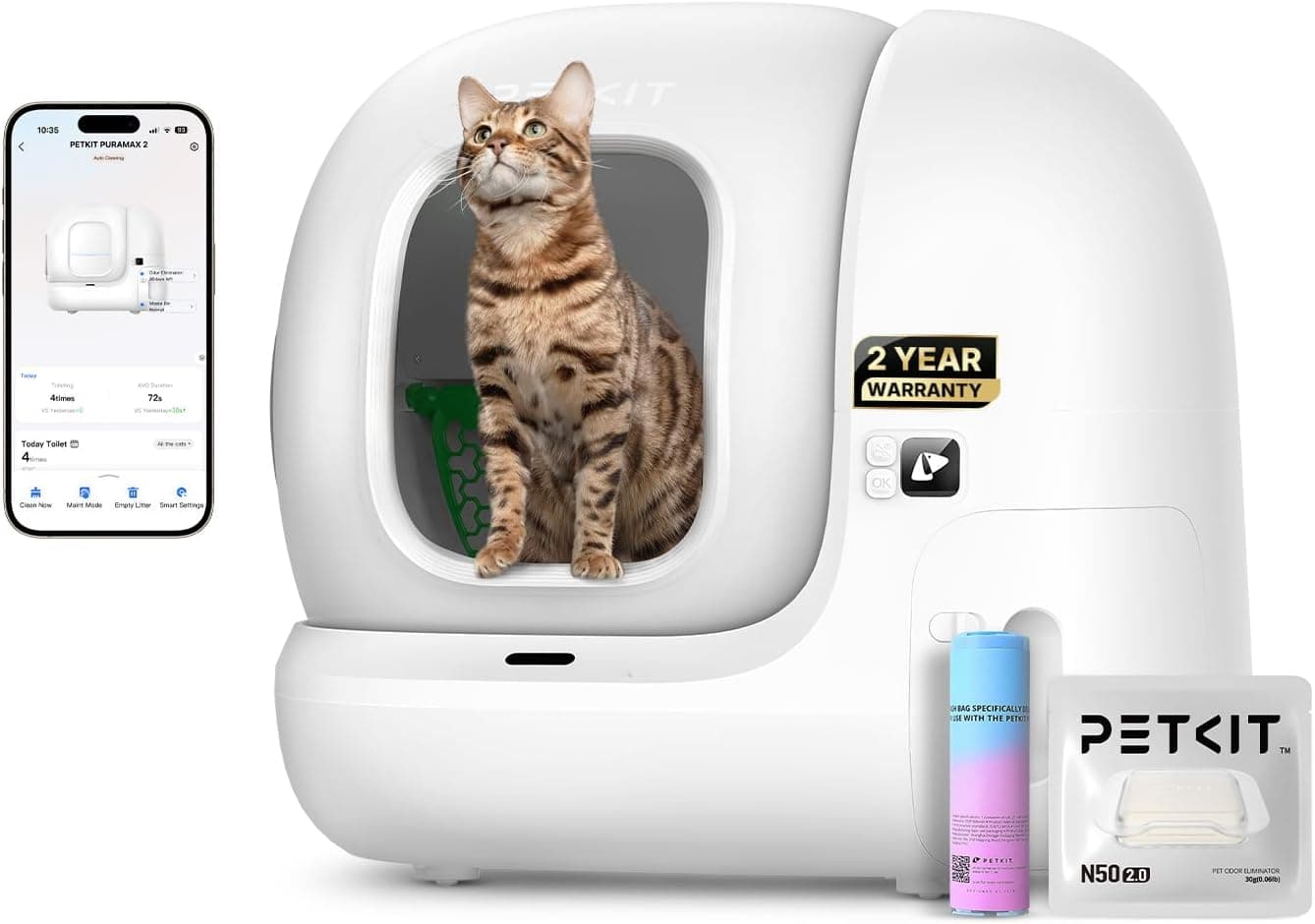
The PETKIT PuraMax 2 is our top pick because it delivers the most complete feature set in this price range. PETKIT lists the PuraMax 2 at $359.99 on their official site, though Amazon pricing has been seen lower during sales. It features 11 safety sensors (7 infrared + 4 weight), an anti-pinch cylinder design that keeps the entrance open at all times, and a sealed 7L waste bin that PETKIT says supports up to 15 days of hands-free use for a single cat.
Odor control is a standout: the sealed waste bin pairs with PETKIT's N50 2.0 odor eliminator, and an optional Air Purifier Smart Spray claims to reduce up to 99% of bacteria. The app tracks litter box visits and weight changes for multi-cat households, which can help flag urinary health issues early. The PuraMax 2 works with most clumping litters (not crystal litter) and accommodates cats from 3.3 to 22 lbs. It requires 2.4 GHz Wi-Fi and must sit on a hard, flat surface — not carpet. For maintenance tips, see our PETKIT PuraMax 2 deep cleaning guide. You can check current pricing on Amazon.
Best Budget Pick: Catlink Scooper Open-X — $199
The Catlink Scooper Open-X is the most affordable option on this list at $199, and it earned Wirecutter's budget pick recommendation for 2026. It uses an open-top rotating drum design with an incomplete gear mechanism that mechanically prevents the entrance from closing — the same safety principle found in the PETKIT PuraMax 2. It includes infrared, weight, and anti-pinch sensors.
The 12L waste drawer supports up to 15 days for a single cat, and it supports both 2.4 GHz and 5 GHz Wi-Fi (a notable advantage over the PuraMax 2's 2.4 GHz-only limitation). The app tracks usage, weight, and visit duration. The main drawbacks: the app interface is reportedly less polished than competitors, and Catlink offers only a one-year warranty with no extension option. Multi-cat recognition requires a one-time $30 in-app unlock. For cat parents who want the core self-cleaning function at the lowest possible price without sacrificing safety, the Open-X is hard to beat.
Best Open-Top Design: Neakasa M1 Plus — $379.99
The Neakasa M1 Plus sits right at the $379.99 price point and is designed for cats who dislike enclosed spaces. Its open-top design means there's no globe or hood — cats enter from above, which can reduce anxiety for skittish or claustrophobic felines. The M1 Plus features 6 sets of infrared sensors and 4 weight sensors, a pinch-free rotation system, and a Kitten Mode for cats under 2.2 lbs.
The 11.23L waste bin supports up to 14 days of hands-free use, and Neakasa's "Pull & Wrap" disposal system seals waste bags in seconds. The M1 Plus includes an upgraded leak-prevention layer that the company says reduces up to 95% of urine leaks. It works with clumping litter only and supports cats from 2.2 to 33 lbs — making it one of the few options suitable for very large breeds like Maine Coons. Neakasa backs the M1 Plus with a 2-year warranty, which is longer than both PETKIT and Catlink offer. The main trade-off is that it's the largest unit on this list, so measure your space carefully.
Best for Crystal Litter: PetSafe ScoopFree Crystal Smart — ~$220
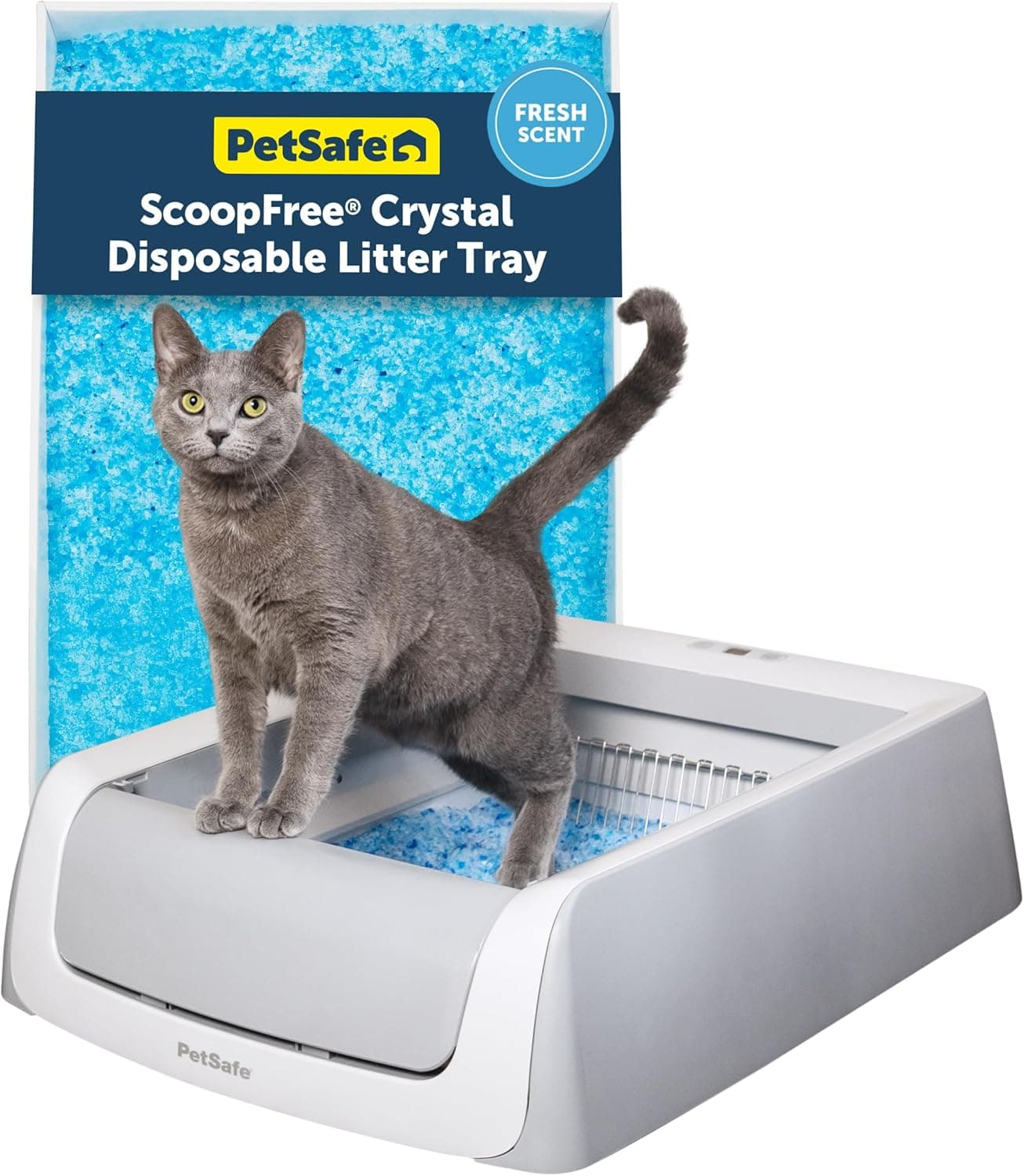
The PetSafe ScoopFree Crystal Smart takes a different approach: instead of rotating a drum, it uses a rake that sweeps solid waste into a covered trap 20 minutes after your cat exits. It's designed exclusively for crystal litter, which absorbs urine and dehydrates solids — PetSafe claims 5x better odor control than traditional clay litter. The Crystal Smart is app-connected via the My PetSafe app and includes a health counter for tracking litter box visits.
At approximately $220 on Amazon, it's one of the most affordable app-connected options. However, there are real trade-offs. You're locked into PetSafe's proprietary disposable crystal trays, which adds ongoing cost (roughly one tray per month for a single cat). Some Amazon reviewers report issues with waste sticking to the rake and inconsistent odor control over time. The ScoopFree line is also available in a non-smart version at a lower price if app connectivity isn't a priority. This box is best for single-cat households that already prefer crystal litter and want the simplest possible maintenance routine.
Safety Features That Actually Matter
Before buying any self-cleaning litter box, safety experts recommend confirming four features are present. First, cat-presence detection — weight sensors or infrared sensors that detect when a cat is inside and prevent the cycle from starting. Second, a delayed cycle start (typically 3–15 minutes after the cat exits) so a cat that circles back is detected before rotation begins. Third, pinch protection — mechanical or torque-based sensors that stop the cycle if resistance is met. Fourth, and most critically, an open entry that never closes during the cleaning cycle.
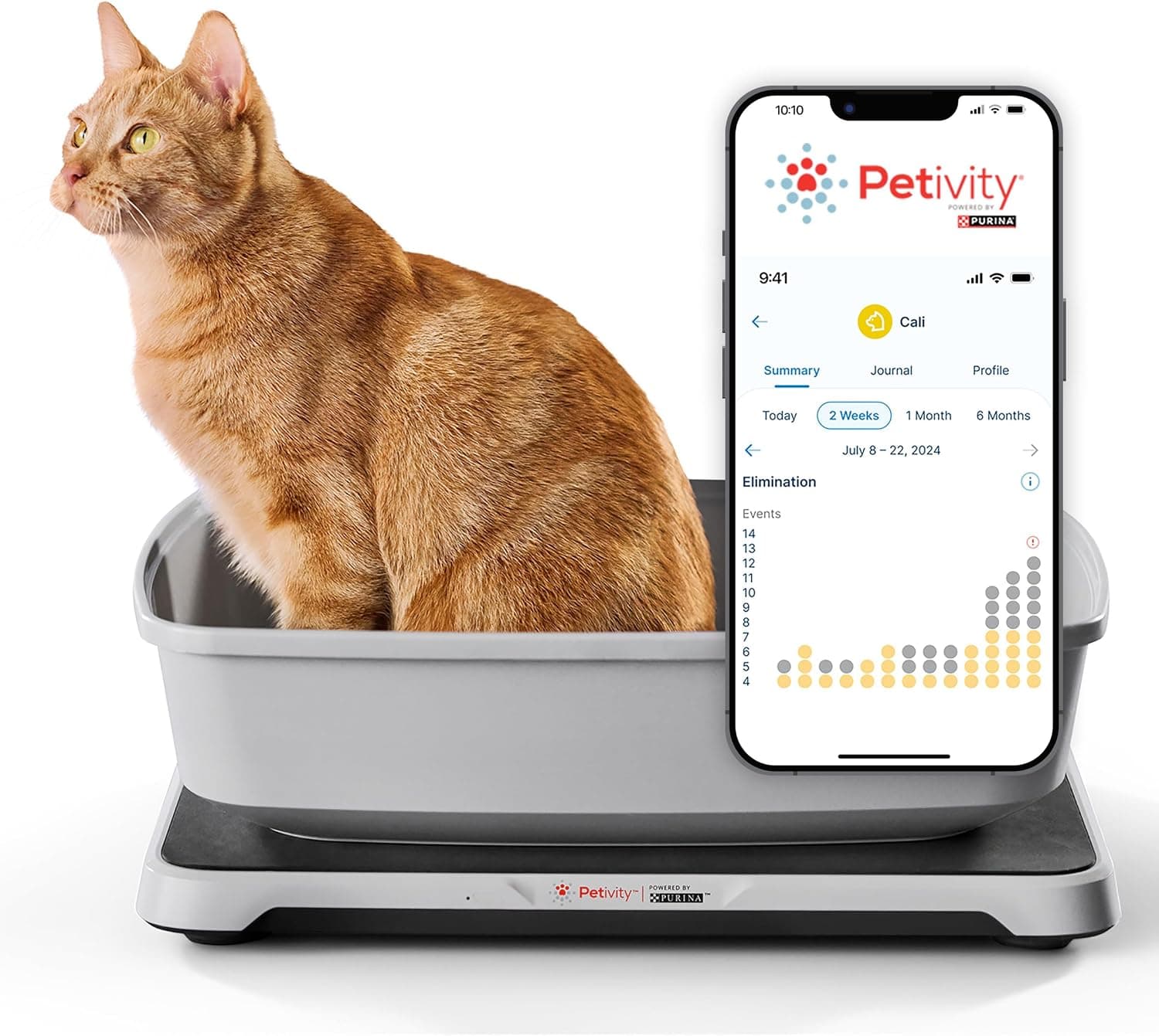
All four boxes in this guide meet these criteria. The PETKIT PuraMax 2, Catlink Open-X, and Neakasa M1 all use incomplete-gear or anti-pinch designs that keep the entrance open at all times. The PetSafe ScoopFree uses a rake system rather than a rotating drum, which eliminates the entrapment risk entirely. Avoid any box where the manufacturer doesn't explicitly publish its safety sensor specifications — safety experts note that most documented injuries have come from cheap unbranded imports with weak or absent sensors. For additional health monitoring, consider pairing your automatic box with a Petivity Smart Litter Box Monitor, which tracks weight and usage patterns independently.
Which Cats Should Avoid Self-Cleaning Boxes?
Self-cleaning litter boxes are not suitable for every cat. Kittens under 3 lbs are too light for most weight sensors to detect reliably, which means the cleaning cycle could start while a kitten is still inside. Most manufacturers recommend waiting until a kitten is at least 6 months old. Cats with severe arthritis or mobility issues may struggle with entry heights — the PuraMax 2 has a relatively low 7.87-inch threshold, but some models exceed 13 inches.
Cats with documented anxiety around enclosed spaces may find rotating-drum designs stressful. For these cats, open-top models like the Neakasa M1 or a traditional box may be a better choice. Additionally, vets caution that automatic boxes can make it harder to spot health changes in your cat's waste — changes in urine output, color, or consistency are often early signs of illness. If you use an automatic box, the app's health tracking features become your primary monitoring tool, so choose a model with robust data reporting. For a comprehensive approach to round-the-clock pet monitoring, check out our 24-Hour Smart Pet Care Framework.
How to Introduce Your Cat to a Self-Cleaning Litter Box
Even the best self-cleaning litter box won't work if your cat refuses to use it. Vets recommend a gradual introduction: place the new box next to your existing litter box without turning on the automatic cleaning function. Let your cat explore it on their own terms for several days. Once your cat is using it consistently, enable the cleaning cycle but start with manual mode so you control when it runs.
Gradually transition to automatic mode once your cat seems comfortable with the movement and noise. Keep a backup traditional litter box available during the transition period — some cats prefer having both options. If your cat shows signs of stress (avoiding the box, urinating outside it, hiding), slow down the process. The PETKIT PuraMax 2 and Neakasa M1 both offer Kitten Protection Modes that disable automatic cleaning entirely, which can also be useful for anxious adult cats during the adjustment period. Remember that most boxes work best with 2–3 inches of litter — overfilling can interfere with sensors.
Frequently asked questions
▶Are self-cleaning litter boxes safe for cats?
Yes, when you choose a model from an established brand with proper safety features. Look for cat-presence detection (weight or infrared sensors), a delayed cycle start, pinch protection, and an open entry that never closes during cleaning. All four boxes recommended in this guide meet these criteria. Avoid cheap unbranded imports that don't publish their safety specifications.
▶Can kittens use self-cleaning litter boxes?
Most manufacturers recommend waiting until a kitten is at least 6 months old or weighs at least 3 lbs, since lighter kittens may not trigger weight sensors reliably. The PETKIT PuraMax 2 and Neakasa M1 both offer Kitten Protection Modes that disable automatic cleaning. Always keep a traditional litter box available for young kittens.
▶Do self-cleaning litter boxes work with regular clumping litter?
Most rotating-drum models (PETKIT PuraMax 2, Catlink Open-X, Neakasa M1) work with standard clumping litter, including clay and tofu varieties. The PetSafe ScoopFree line is the exception — it requires proprietary crystal litter trays. Always check the manufacturer's litter compatibility list before purchasing.
▶How much does a self-cleaning litter box cost?
Prices range from about $199 for the Catlink Scooper Open-X to $379.99 for the Neakasa M1 Plus. The PETKIT PuraMax 2 is listed at $359.99 on PETKIT's site but may be available for less on Amazon during sales. Premium models like the Litter-Robot 4 cost $699 or more. Factor in ongoing costs like replacement waste bags, litter, and (for PetSafe) disposable crystal trays.
▶How often do you need to empty a self-cleaning litter box?
It depends on the model and number of cats. Most boxes in this guide advertise 14–15 days of hands-free use for a single cat. Multi-cat households will need to empty the waste bin more frequently — typically every 5–7 days. The app on most models will notify you when the waste bin is full.