Cat Care · 8 min read
Best Open-Top Automatic Litter Box for Nervous Cats
Compare open-top automatic litter boxes for nervous cats, with safety, noise, access, escape-route, litter, and setup advice.
Introduction
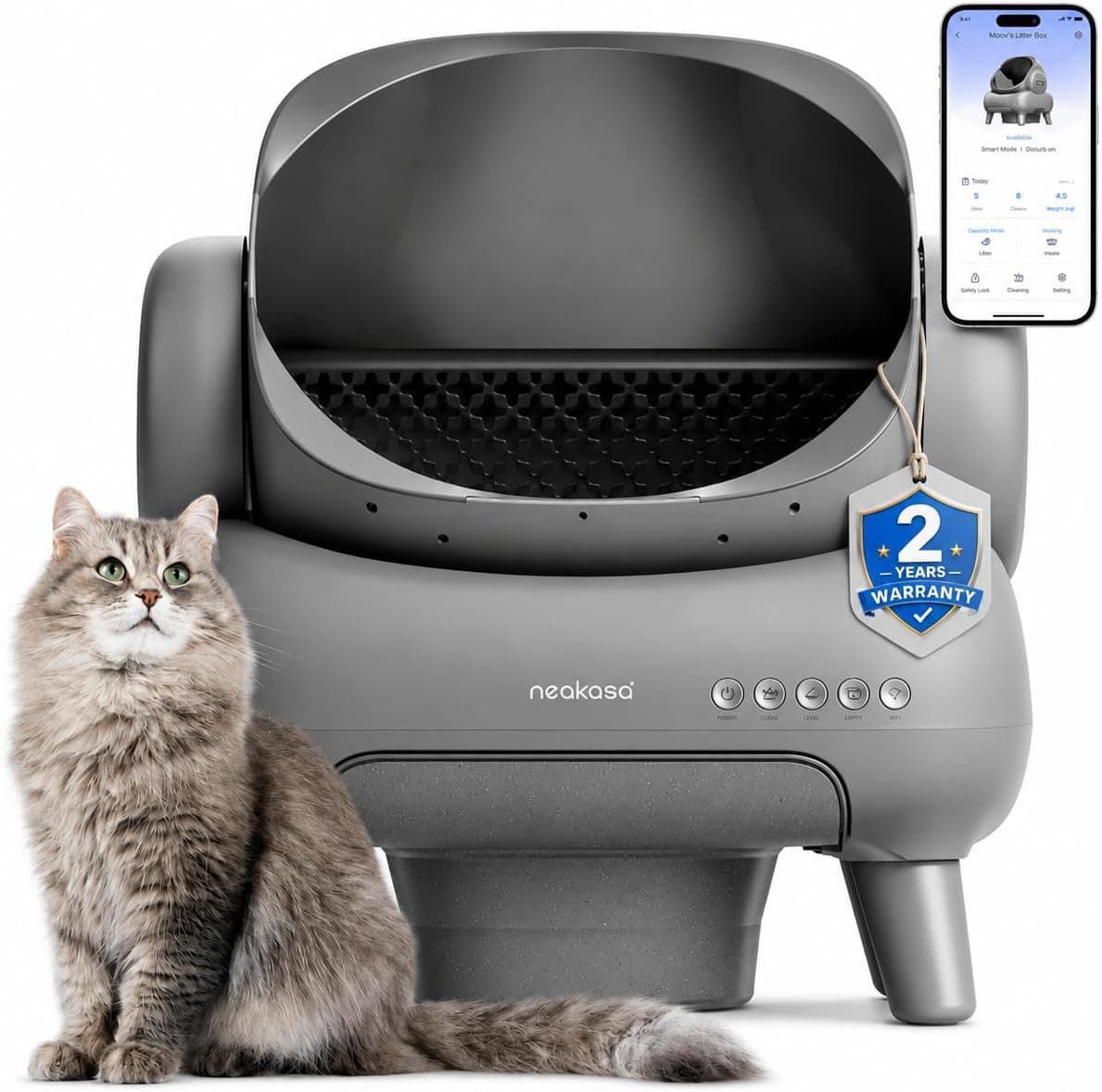
If your cat refuses a covered robot, the problem may not be stubbornness. A dark entrance, rotating parts, sudden noise, or a box placed where escape feels blocked can make an automatic litter box seem unsafe. For busy dog parents managing a cat-and-dog household, an open-top design can make the transition easier because the cat can see the room and leave quickly. Our starting point is the Neakasa M1 Plus open-top litter box, but the right choice depends on your cat’s size, confidence, litter habits, and tolerance for machine noise.
Open-top does not automatically mean better for every cat. A 2013 study found no overall preference between covered and uncovered boxes when boxes were large and cleaned daily, although individual cats did show preferences. Veterinary behavior guidance also emphasizes quiet placement, easy access, escape routes, and consistent cleaning. This guide explains what to compare before buying, including safety sensors, entry height, visibility, noise, litter compatibility, and the tradeoff between openness and odor containment.
Why a nervous cat may reject an enclosed robot
A covered automatic litter box combines several possible stressors: a narrow entrance, limited visibility, trapped odors, and a moving mechanism that may start after the cat leaves. Some cats investigate once and never return. Others use the box only when the house is quiet. That does not prove every enclosed unit is unsuitable, but it does show why individual acceptance matters. Veterinary Partner recommends quiet, low-traffic placement with easy access and escape routes, and notes that self-cleaning mechanisms can frighten some cats. Research is more nuanced: in a controlled study of 27 analyzed cats, most showed no preference between covered and uncovered boxes when both were large and scooped daily, while a minority preferred one style. If your cat is hesitant, offer a litter-box transition plan rather than forcing a sudden switch.
What makes an open-top automatic litter box a good fit
For a nervous cat, visibility is the main advantage of an open-top design. The cat can scan the room, see approaching dogs or people, and leave without navigating a tunnel. A lower or more accessible entrance can also help senior, arthritic, or large cats, although you should measure your cat and the room rather than relying on marketing language. Neakasa lists the M1 Plus with a 13.86-inch entry height, a 2.2-to-around-33-pound recommended cat range, six sets of infrared sensors, four weight sensors, and operation noise of up to 50 dB. Those are manufacturer specifications, not a guarantee that your cat will accept the machine. The open structure may also expose more litter scatter and odor than a sealed globe. Put the unit on a firm, level surface, keep a clear exit path, and retain the old box during the adjustment period. For more sizing guidance, see our automatic litter box guide for small and senior cats.
Safety features matter more than smart-app extras
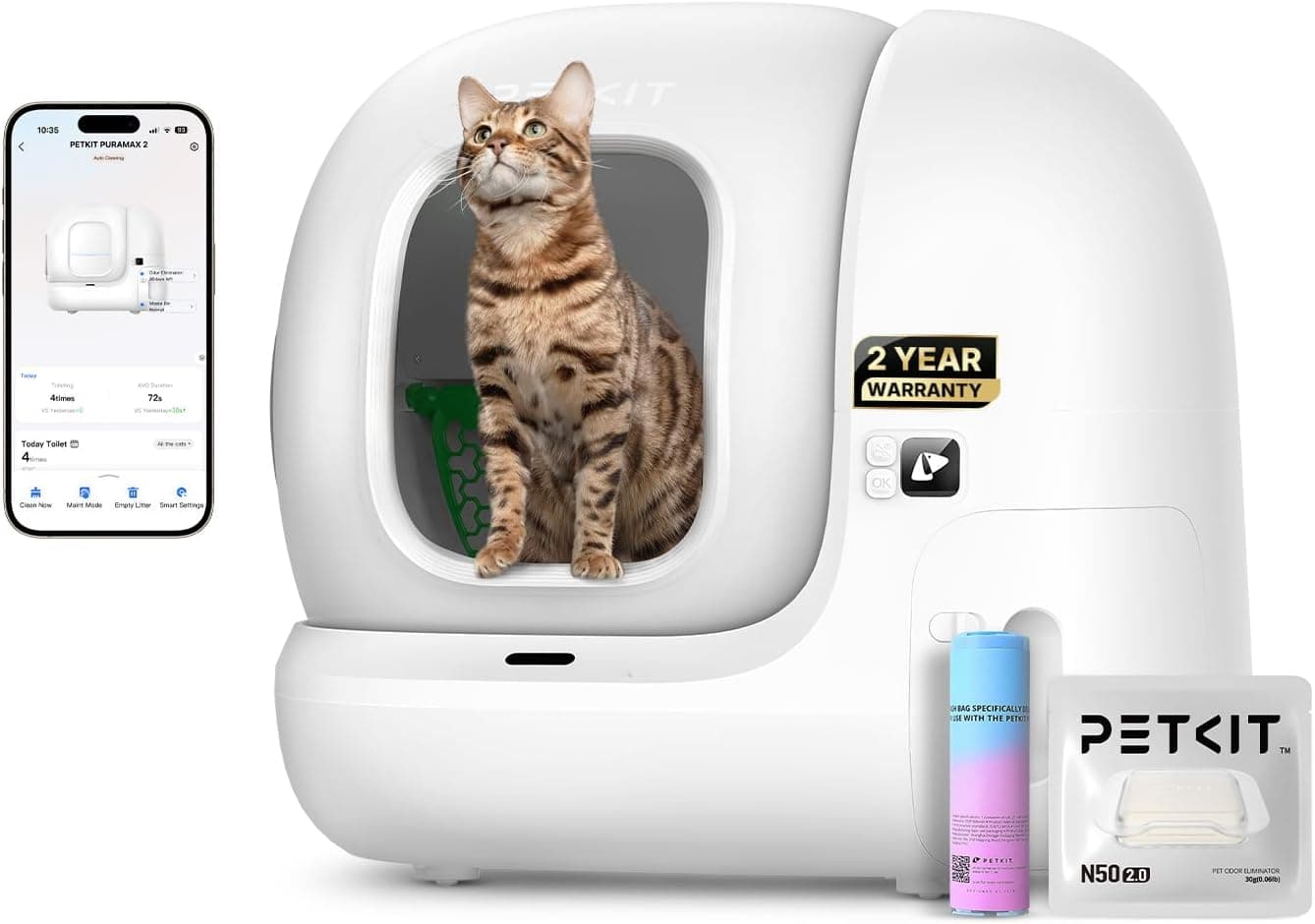
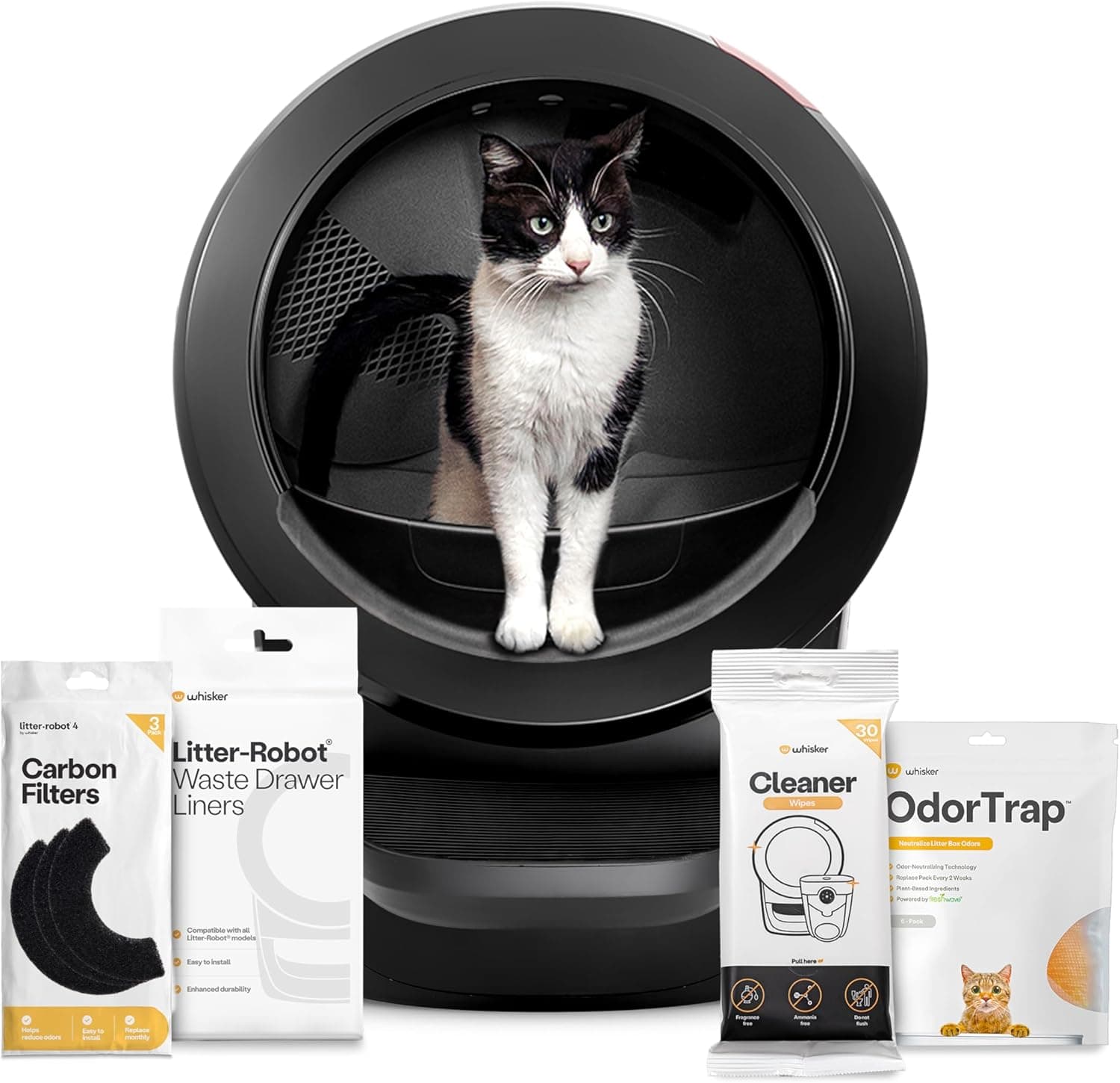
Every automatic box has moving parts, so treat sensor claims as a checklist rather than a substitute for supervision. Look for cat-presence detection, weight sensing, a pause function, overload protection, and a design that leaves a usable exit during or after rotation. Neakasa says the M1 Plus pauses when its infrared and weight sensors detect a cat and describes a pinch-free rotation system. The manufacturer also recommends a manual or kitten mode for cats below its automatic-mode weight threshold. Read the current manual before enabling automatic cleaning, especially with kittens, unusually small cats, or a cat that has not yet used the unit confidently. As a comparison point, Whisker describes Litter-Robot 4 safety features including laser and weight sensing, anti-pinch sensors, and overload detection. PETKIT describes PuraMax 2 with an anti-pinch structure, 11 sensors, and a minimum recommended cat weight of 3.3 pounds. Never place an automatic box where a dog can obstruct the entrance or startle the cat.
Noise, litter, and cleanup are the real buying objections
A quiet rating is useful, but the sound of a motor, vibration on the floor, bag movement, or a clump dropping can still surprise a timid cat. Introduce the box with automatic cycling disabled, allow investigation, and run a supervised cycle only after your cat is using it. Litter compatibility is equally important. Neakasa says the M1 Plus works best with fast-clumping, scoopable litter and excludes non-clumping, newspaper, and wood-pellet types. PETKIT lists compatibility with most clumping litter and supplies different sifters for finer or larger particles. Follow the exact manual for the model you buy; a wrong litter can cause poor separation, stuck clumps, or excess waste. Open-top units also make tracking more visible, so budget for a mat and routine floor cleanup. Compare ongoing supplies with our automatic litter box cost guide, and remember that an advertised multi-day waste capacity varies with cat count, diet, litter, and climate.
Our practical pick: Neakasa M1 Plus, with sensible caveats
The Neakasa M1 Plus is the most direct match for owners searching for an open-top automatic litter box for a nervous or large cat. Its visible, open entry avoids the enclosed-globe experience; the official specifications list a 7.17-liter litter capacity, an 11.23-liter waste bin, app control, and a recommended cat range up to around 33 pounds. The same page states that it should use compatible clumping litter and that kittens below the stated weight threshold should use a non-automatic mode. The tradeoff is straightforward: openness can improve access and confidence, but it can also reveal tracking and provide less physical odor containment than a sealed alternative. Before ordering, confirm the exact M1 Plus model, current warranty terms, return policy, dimensions, and included supplies. If your cat prioritizes odor containment and accepts enclosed designs, compare PETKIT PuraMax 2 or read our Neakasa M1 Plus versus Litter-Robot 4 comparison.
Frequently asked questions
▶Are open-top automatic litter boxes better for nervous cats?
They can be a better fit for some cats because visibility and an unobstructed exit may feel less restrictive. However, research has not shown a universal covered-versus-uncovered preference. Keep the cat’s individual response, box size, noise, location, and cleanliness in mind.
▶How do I introduce an automatic litter box to a nervous cat?
Place it near the existing box, use familiar litter, leave automatic cleaning disabled at first, and let your cat investigate voluntarily. Once the cat uses it reliably, supervise the first cleaning cycles. Do not force the cat inside.
▶Is the Neakasa M1 Plus safe for kittens?
Neakasa provides a kitten or manual mode and says kittens below its stated automatic-mode weight threshold should not use automatic cleaning. Check the current manual, disable automatic cycling when required, and supervise young or unusually small cats.
▶What litter works in the Neakasa M1 Plus?
The manufacturer recommends fast-clumping, scoopable litter and says the M1 Plus is not intended for non-clumping, newspaper, or wood-pellet litter. Follow the current product instructions and confirm that your chosen litter separates cleanly.
▶Where should I place an open-top automatic litter box?
Choose a quiet, low-traffic location with a clear approach and escape route. Keep it away from food and water, avoid unstable flooring, and make sure dogs or other cats cannot block the entrance.