Self-Cleaning Cat Litter Boxes · 9 min read
Neakasa M1 Plus vs Litter-Robot 4: Which Smart Litter Box Fits Your Cat?
Compare Neakasa M1 Plus vs Litter-Robot 4 on design, cat fit, capacity, app costs, warranty, price, and everyday maintenance.
Introduction
If you are comparing the Neakasa M1 Plus vs Litter-Robot 4, the biggest decision is not simply price. It is whether your cat is more likely to accept an open-top tray or an enclosed rotating globe. That choice affects comfort, litter tracking, odor control, and how confidently you can leave the box during a busy week.
This comparison focuses on the details that matter before checkout: large-cat fit, waste capacity, app requirements, warranty coverage, upfront price, and maintenance. For more context on choosing litter for an automatic unit, see our guide to the best cat litter for automatic litter boxes, then compare the Neakasa M1 Plus product details with the current Litter-Robot 4 specifications.
Quick verdict: Neakasa for openness, Litter-Robot for the premium ecosystem
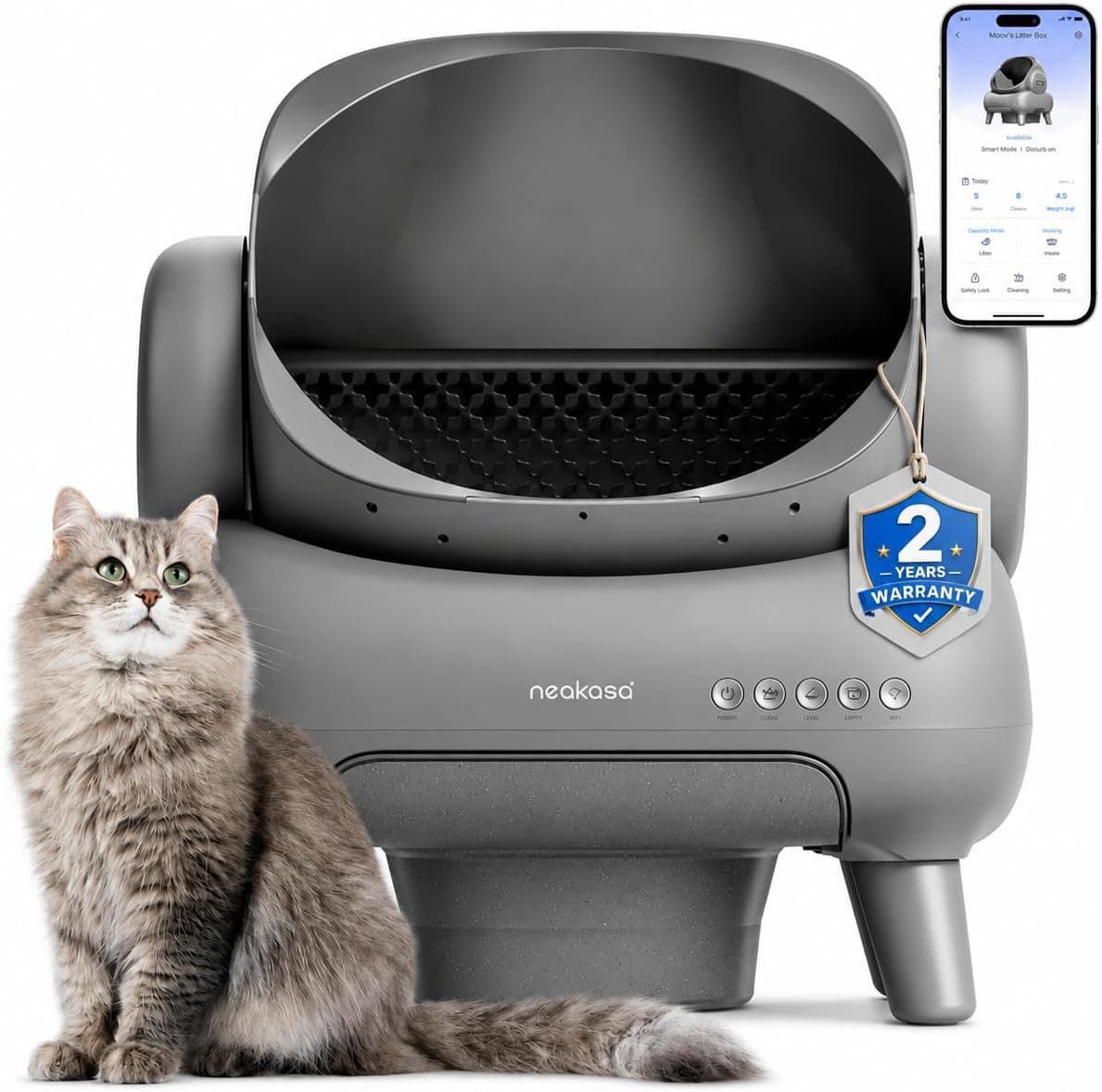
The Neakasa M1 Plus is the more distinctive choice. Its open-top design gives cats a visible, spacious bathroom and is marketed for larger breeds such as Maine Coons and Ragdolls. Neakasa lists a recommended cat range of 2.2 to about 33 pounds, an 11.23-liter waste bin, a 7.17-liter litter capacity, and support for Android and iOS app control. Its official US page currently displays $379.99, reduced from $549.99, but prices and promotions can change.
The Litter-Robot 4 is the more established premium-style option, with a covered globe, a 15.75-by-15.75-inch entryway, app-based litter and waste monitoring, and a claimed capacity of up to four cats. Whisker’s official page currently lists it from $699, includes a one-year warranty, and offers a 90-day in-home trial. In short: choose Neakasa when open access and lower upfront cost dominate; choose Litter-Robot when trial length, premium support options, and a mature accessory ecosystem matter more.
Open-top versus enclosed: which cat is more likely to use it?
The design difference is practical, not cosmetic. The M1 Plus leaves the top open, so a cat can see the room while entering, turning, and exiting. That may appeal to cats that dislike enclosed spaces or need more headroom. It also makes the interior easier to view and refill. The trade-off is that an open design may expose more litter to the surrounding room, so a large tracking mat and careful placement are sensible.
The Litter-Robot 4 uses an enclosed globe with a wide stated entryway and a rotating sifting cycle. Its enclosed waste drawer and carbon-filter system are designed to reduce odor escape. However, an enclosed unit can feel less inviting to a cat that already avoids covered boxes. Do not force a reluctant cat into either machine. Place the new box beside the old one, leave automation off initially, and allow familiar litter scent to encourage investigation. Our automatic litter box transition guide covers the acclimation process in more detail.
Large-cat fit and capacity: measure the cat, not just the marketing
For a large cat, the M1 Plus has a clear paper advantage because the open-top structure avoids a narrow globe entrance and gives the cat more vertical freedom. Neakasa lists an entry height of 13.86 inches and recommends the unit for cats up to about 33 pounds. Those are manufacturer specifications, not a guarantee that every large cat will prefer it, so measure your available floor space and watch how your cat turns around in the current box.
Whisker says the Litter-Robot 4 has no stated upper weight limit, but its usable space is still shaped by the 15.75-inch entryway and globe dimensions. The company describes it as suitable for large cats and households with up to four cats. Capacity claims also depend on household size, litter type, clump size, and cleaning frequency. Neakasa cites up to 14 days for one cat, while a multi-cat home will require more frequent emptying. Read our multi-cat self-cleaning litter box guide before treating either number as a travel guarantee.
App costs, Wi-Fi, and the hidden ownership details
Both machines use connected apps, but the core question is what you actually need from them. Neakasa lists app control for activity tracking, litter-level monitoring, and remote operating modes. Its official product page says the machine continues operating according to previous settings if the internet disconnects, although activity updates will not appear in the app. The product requires 2.4GHz Wi-Fi. The official page does not state a mandatory recurring fee for basic M1 Plus operation, so verify current terms before buying accessories or services.
Litter-Robot 4 also requires 2.4GHz Wi-Fi and uses the Whisker app for litter levels, waste levels, weight data, activity history, and notifications. Whisker sells optional Whisker+ offerings and bundles, but the base product page presents the box and app features separately from those optional offers. Check the exact bundle at checkout rather than assuming advanced history or every insight feature is included. If you want a less connected setup, both brands still require ordinary physical maintenance even when the app is working.
Price, warranty, and return policy: compare risk, not just sticker price
At the time of research, Neakasa’s official US page displayed the M1 Plus at $379.99, while Whisker’s official Litter-Robot 4 page displayed a starting price of $699. That is a substantial upfront difference, although sales, bundles, taxes, shipping, and replacement supplies can change the real total. Neakasa lists a 30-day return policy and a two-year limited warranty on its official page. The Amazon listing reviewed for this comparison showed different warranty wording, so confirm the warranty attached to the seller, region, and specific listing before ordering.
Whisker lists a 90-day in-home trial and one year of included WhiskerCare coverage, with a three-year protection option available for an additional charge. That longer trial can matter if your cat is uncertain about a covered globe. Budget for liners, filters, litter, and occasional replacement parts with either machine. For a broader ownership-cost framework, use our automatic litter box cost comparison. Prices are snapshots, not guarantees.
Safety and maintenance checklist before you buy
Read the manual before switching on automatic cleaning. Neakasa lists six pairs of infrared sensors and four weight sensors, plus a kitten mode for cats below its automatic-mode threshold. Whisker says kittens under three pounds should not use Litter-Robot 4 in automatic mode because the SmartScale may not recognize them. For kittens, cats recovering from surgery, or cats with mobility or urinary problems, ask your veterinarian whether an automated box makes monitoring and access easier or harder.
Keep the unit on a stable, level surface, use only compatible litter, inspect sensors and waste areas regularly, and do not treat an app notification as proof that the box is functioning normally. Neakasa recommends fast-clumping, scoopable litter and excludes non-clumping and wood-pellet types. Whisker says Litter-Robot 4 works with most clumping or scoopable litters but excludes strictly absorbent, non-clumping, loose-clumping, newspaper-based, and wood-based pellets. Our cat litter-box habit monitoring guide explains why routine observation still matters.
Which one should busy pet parents buy?
Buy the Neakasa M1 Plus if your priority is an open, visually accessible bathroom for a large or cautious cat and you want a lower starting price. It is also the simpler recommendation when your cat refuses enclosed boxes or needs more overhead room. Before ordering, confirm the current model name, warranty terms, return window, Wi-Fi requirements, and the litter you plan to use. For a convenient retail option, you can check the Neakasa M1 Plus on Amazon, where listing details and seller terms may differ.
Buy the Litter-Robot 4 if you prefer an enclosed design, want a 90-day in-home trial, and value Whisker’s app, support, and accessory ecosystem enough to justify the higher purchase price. It is not automatically better for every cat: the best machine is the one your cat will use consistently and that you will maintain. If you are still comparing categories, browse PawProof Picks’ viral pet finds for additional smart-care ideas.
Frequently asked questions
▶Is the Neakasa M1 Plus better than the Litter-Robot 4 for large cats?
It can be a better fit for some large cats because its open-top design provides more overhead space and Neakasa lists a recommended range up to about 33 pounds. Litter-Robot 4 has a wide stated entryway and no stated upper weight limit, but its enclosed globe may feel less spacious to certain cats. Measure your cat’s current usable space and consider temperament, not weight alone.
▶Does the Neakasa M1 Plus require a monthly app subscription?
Neakasa’s official M1 Plus product page describes app control and does not state a mandatory recurring fee for basic operation. Because app terms and regional offerings can change, confirm the current terms before purchase. The machine is described as continuing its previous settings if internet access is interrupted, although app activity updates will stop.
▶Does Litter-Robot 4 require a subscription?
The Litter-Robot 4 uses the Whisker app, and Whisker separately offers optional Whisker+ products and bundles. The official product page does not make a subscription a condition of purchasing the base litter box. Check the exact bundle and current app terms if you want extended history or additional insight features.
▶Which has the larger waste capacity?
Neakasa lists an 11.23-liter waste bin and cites up to 14 days for one cat. Whisker describes an enlarged waste drawer but does not provide a directly comparable liter figure on the Litter-Robot 4 product page reviewed here. Actual emptying frequency depends on the number of cats, litter, clump size, and usage.
▶What litter works in both machines?
Both manufacturers support compatible clumping or scoopable litter, although exact exclusions differ. Neakasa recommends fast-clumping granular litter and excludes non-clumping, loosely clumping, newspaper, and wood-pellet types. Whisker says Litter-Robot 4 works with most clumping or scoopable litters but excludes strictly absorbent, non-clumping, loose-clumping, newspaper-based, and wood-based pellets.
▶Are automatic litter boxes safe for kittens?
Use extra caution. Whisker says kittens under three pounds should not use Litter-Robot 4 in automatic mode because its SmartScale may not recognize them. Neakasa provides a kitten mode for cats below its automatic-mode threshold, but automatic cleaning is disabled in that mode. Follow the relevant manual and ask a veterinarian if your kitten or cat has medical or mobility concerns.