Cat Care · 8 min read
Best Cat Litter for Automatic Litter Boxes: Clay, Tofu, and Mixed Options
Compare clumping clay, tofu, and mixed cat litter for automatic boxes, including compatibility tips for PETLIBRO Luma owners.
Introduction
The best cat litter for an automatic litter box is not necessarily the litter your cat already uses. Sifting systems need litter that forms firm clumps and moves through the machine's screen without leaving excessive dust, residue, or oversized pellets behind. For most systems, small-grain clumping clay is the safest starting point; some models also support carefully selected tofu or mixed formulas.
If you are comparing equipment as well as litter, our automatic litter box cost comparison can help with the bigger buying decision. This guide focuses on compatibility, especially for PETLIBRO Luma owners, and includes Amazon shopping links so you can compare current options without assuming every litter works in every machine.
Quick answer: clumping clay is the safest default
For a typical rotating or sifting automatic litter box, choose a clumping formula with small-to-medium granules, firm clumps, and manageable dust. ARM & HAMMER's current guidance explains that clumping litter lets the machine separate waste from clean litter, while smaller particles pass through the sifting mechanism more easily. That makes small-grain clumping clay litter on Amazon the most straightforward first trial for many machines. Unscented is a sensible starting point because the ASPCA says cats commonly prefer clumping, unscented litter, although individual preferences vary. Avoid treating this as a universal rule: always check your box's manual before buying a full case. If your cat rejects the new texture or begins eliminating outside the box, pause the transition and review our guide to monitoring cat health through litter box habits.
PETLIBRO Luma litter compatibility
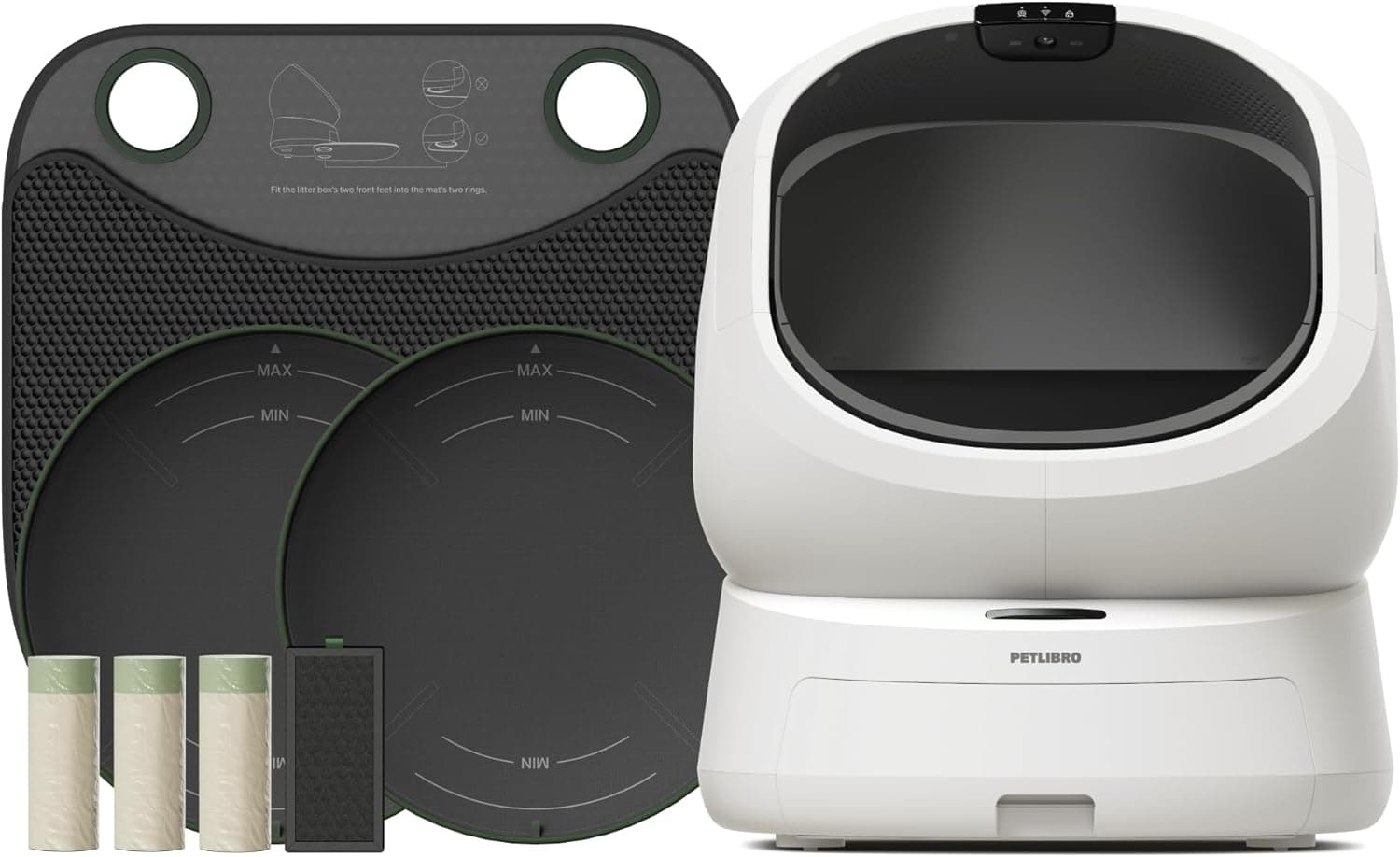
PETLIBRO says Luma works with clumping, tofu, and mixed litters, but not non-clumping crystal or pine litter, grass-seed litter, or cassava litter with very fine particles. Luma includes two filters: PETLIBRO identifies the round-holed filter for small-grain clumping litter and the long-pellet filter for tofu or mixed litter. That distinction matters more than a bag's marketing label. A tofu product may be technically clumping yet still have a shape or size that does not suit the installed filter. Before purchasing, confirm the product's granule shape and follow the Luma manual. Keep the unit on a hard, level floor because PETLIBRO says carpet can affect sensor accuracy. You can review the PETLIBRO Luma with accessories or compare it with other models in our PETLIBRO Luma versus Litter-Robot 4 guide.
Clumping clay: the reliable performance choice
Clumping clay remains the easiest category to recommend when your priority is predictable sifting. A good formula should create a solid clump quickly enough that the machine does not smear wet litter across its liner or discard excessive clean litter. Look for a product described as hard-clumping and low-dust, then test a small bag before committing. Clumping clay litter for automatic boxes gives you several current options to compare, but brand compatibility is still model-specific. Whisker's official Litter-Robot guidance likewise requires clumping litter and warns against non-clumping, paper-based, and wood-pellet formulas for its system. Clay can be heavier to carry and may track more than larger pellets, so use a litter mat and keep the box at the manufacturer's fill line. For multi-cat homes, our self-cleaning litter box guide covers capacity and setup considerations.
Tofu litter: lower-dust potential, higher compatibility risk
Tofu litter can be appealing if you want a plant-based option or dislike the dust associated with some clay formulas. The catch is shape. Long, stick-like tofu pellets may not pass through a rotary sifting screen even when the product claims to clump. PETLIBRO specifically allows tofu litter in Luma and provides a long-pellet filter, but that does not mean every tofu product is an automatic fit. Start with a small bag of a formula whose package clearly identifies automatic-box compatibility, and watch whether clean litter is being thrown away, clumps are breaking, or the filter is catching pellets. Mini-pellet tofu litter options are a useful comparison point, not a guarantee. Do not use tofu simply because another machine supports it; verify your model's instructions first.
Mixed litter and a practical testing routine
Mixed litter usually means a blend such as tofu and clay, but formulas vary widely in particle size, density, fragrance, and clumping behavior. For Luma, PETLIBRO lists mixed litter as compatible and supplies a long-pellet filter, so a suitable blend may offer a compromise between plant-based material and firm clumping. The safest way to test any new litter is gradual: keep the old box available, add the new litter according to the manufacturer's transition instructions, and observe several cleaning cycles. Check for intact clumps, clean litter returning to the bed, unusual motor stops, residue on the liner, and excessive tracking. Keep the fill level within the marked range rather than improvising. If your cat avoids the box, return to a familiar setup; the ASPCA advises ruling out medical and behavioral causes rather than forcing a cat to use a new box. Our automatic litter box transition guide covers the process in more detail.
Frequently asked questions
▶What is the best cat litter for an automatic litter box?
Small-grain, hard-clumping litter is the safest general starting point because it forms a removable clump and can pass through many sifting mechanisms. Confirm the specific machine's requirements first.
▶Can I use tofu litter in a PETLIBRO Luma?
Yes. PETLIBRO lists tofu and mixed litter as compatible with Luma and provides a long-pellet filter. Still verify the product's shape and size, because not every tofu formula will sift identically.
▶Can I use pine or crystal litter in an automatic litter box?
It depends on the model, but PETLIBRO Luma does not support non-clumping pine or crystal litter. Never substitute those types without checking the manufacturer's current instructions.
▶Is scented litter better for odor control?
Not necessarily. Scent can mask odors but may bother some cats. The ASPCA says cats commonly prefer unscented clumping litter, so unscented is a reasonable first choice when transitioning.
▶How do I know if my litter is causing problems?
Look for broken clumps, wet residue, discarded clean litter, tracking, repeated machine errors, or a cat avoiding the box. Stop and check the manual; persistent litter-box changes warrant veterinary attention.